
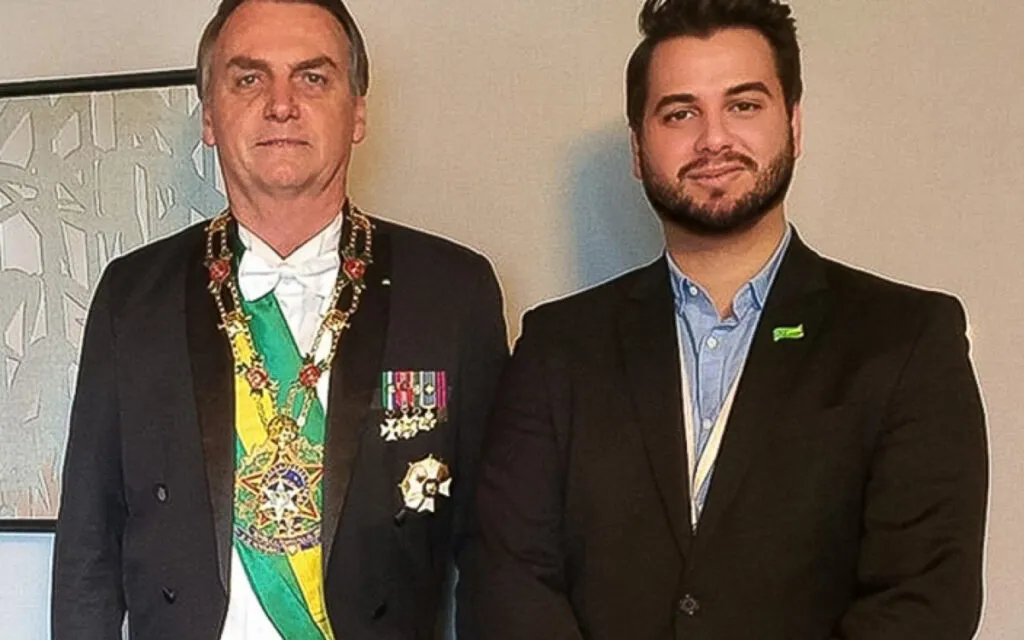
US Denies Supreme Court: Filipe Martins Did Not Enter the United States on the Date Alleged by the Brazilian Court
By Pedro Freitas.
A bombshell revelation has just shaken the foundations of one of Brazil’s most controversial recent imprisonments. The U.S. Customs and Border Protection (CBP) officially confirmed on Friday, October 10, that Filipe Martins did not enter American territory on December 30, 2022—the exact date the Supreme Federal Court (STF) used to justify keeping the former presidential advisor for International Affairs detained for six months.
This information raises grave questions about the basis for the detention and exposes potential flaws or manipulations in Brazil’s justice system. Let’s break down all the details of this case, which could become one of the biggest judicial scandals in recent years.
Who Is Filipe Martins?
To grasp the magnitude of this revelation, it’s important to first understand the central figure in this story.
Filipe Garcia Martins is a career diplomat and served as the special advisor for International Affairs to the Presidency during Jair Bolsonaro’s administration from 2019 to 2022.
Profile and Background:
Academic Background:
- Career diplomat with Brazil’s Itamaraty
- Passed an extremely competitive public exam
- Training in international relations
- Deep knowledge of foreign policy
Role in the Bolsonaro Government:
- Direct advisor to the president on international matters
- Involvement in key diplomatic negotiations
- Presence on presidential overseas trips
- Interlocutor with foreign leaders and governments
Ideological Profile:
- Identified with conservatism
- Critic of progressive international narratives
- Advocate for alignment with the United States
- Controversial stances on social media
Post-Government:
- Target of investigations after Bolsonaro’s term ended
- Accused of involvement in an alleged coup attempt
- Detained preventively by order of the STF
- Kept incarcerated for months without trial
The Detention: Context and Controversies
Filipe Martins was detained preventively amid investigations into the events of January 8, 2023, and alleged coup attempts.
Chronology of the Detention:
Investigations Began:
- After January 8, investigations expanded
- Several former government officials became targets
- Search for those responsible for a “coup plot”
Detention Order:
- STF ordered the preventive detention of Filipe Martins
- Accusations of involvement in a coup conspiracy
- Claim of risk to public order and investigations
Detention Enforced:
- Martins was arrested and remained detained
- Defense contested the legality and necessity of the detention
- Release requests were repeatedly denied
Prolonged Duration:
- Six months of preventive detention
- No conviction, only under investigation
- An unusual situation even by Brazilian standards
Official Justifications:
The STF used various arguments to keep Filipe Martins detained, but one stood out: an alleged trip to the United States on December 30, 2022.
The Official Narrative:
- Martins allegedly traveled to the U.S. in December 2022
- This trip was cited as evidence of international coordination
- Possible flight or seeking external support for actions against democracy
- Risk that he might flee again if released
This trip to the United States was presented as a key element to justify the need for preventive detention and its continuation for months.
The Revelation: U.S. Contradicts the STF
Now comes the explosive part of the story: the United States has officially debunked the claim that Filipe Martins entered the country on the alleged date.
The Official Document:
The U.S. Customs and Border Protection (CBP), the agency responsible for monitoring all entries and exits into American territory, issued a formal statement confirming that there is no record of Filipe Martins entering the United States on December 30, 2022.
Importance of the CBP:
- Federal agency responsible for borders
- Highly rigorous computerized system
- Records every entry and exit into American territory
- Data shared with international authorities
- Virtually impossible to bypass or err
Nature of the Information:
- Official response to a formal inquiry
- Document with international legal value
- Verifiable and auditable information
- Directly contradicts the STF’s claim
Devastating Legal Implications
The revelation that the alleged U.S. trip was false has severe legal consequences.
For Filipe Martins’ Detention:
Compromised Basis:
- If one of the central justifications was false, the entire foundation is undermined
- Detention based on incorrect information is illegal
- Possible judicial error of significant proportions
Right to Freedom:
- Preventive detention must be exceptional and well-grounded
- False information invalidates the justification
- Martins should have been released immediately
Reparation:
- A victim of illegal detention is entitled to compensation
- Moral and material damages can be claimed
- The Brazilian state may be held accountable
For the Justice System:
STF’s Credibility:
- How did a false piece of information reach the court?
- Was there proper verification before the ruling?
- Was there negligence—or something worse?
Investigation Process:
- The quality of investigations is now in question
- Are other pieces of evidence reliable?
- How many others might be detained based on false data?
How Did False Information Reach the STF?
This is one of the most critical and troubling questions in the case.
Possible Hypotheses:
1. Intelligence Error:
Intelligence services may have made a mistake:
- Case of mistaken identity (namesake)
- Data entry error
- Failure in cross-referencing information
- Incorrect interpretation of credit card or phone data
2. Unverified Information:
The STF may have accepted information without checking:
- Excessive trust in sources
- Lack of verification with U.S. authorities
- Haste in decision-making
- Negligence in the verification process
3. Intentional Manipulation:
The gravest scenario involves bad faith:
- Deliberately inserted false information
- Aim to justify a pre-decided detention
- Fabrication of evidence
- Crime against the administration of justice
Comparisons with Other Judicial Error Cases
Unfortunately, this wouldn’t be the first instance of detention based on false or poorly verified information.
Historical Cases in Brazil:
Escola Base (1994):
- False accusations of sexual abuse
- Lives destroyed by negligent investigation
- Media and justice contributed to the tragedy
- None of the accusations were true
Case of the Naves Brothers (1937):
- Arrested and tortured for murder
- “Victim” was alive
- One of Brazil’s biggest judicial errors
- Took decades for reparation
Operation Satiagraha (2008):
- High-profile arrests based on flawed investigations
- Illegal wiretaps and misinterpretations
- Many cases later annulled
- Irreparable damage to victims’ reputations
Difference in the Martins Case:
What makes Filipe Martins’ case particularly serious:
Court Level:
- Not a first-instance error
- Decision by the Supreme Federal Court
- Highest judicial body in the country
- Where errors should be impossible
Political Context:
- Detention occurred amid high polarization
- Involves deep political rivalry
- Risk of justice being weaponized
- Appearance of political persecution
Verifiability:
- Information was easily checkable
- Just required consulting U.S. authorities
- Not a technical or complex matter
- Error seems even more inexplicable
What Should Happen Now?
From the standpoint of the rule of law and justice, certain measures are necessary.
Immediate Actions:
Release of Filipe Martins:
- He should be freed immediately
- Detention based on false information is illegal
- Every additional day is further injustice
Case Review:
- The entire basis needs reevaluation
- Other evidence must be rigorously verified
- The process must be transparent
Apology:
- The Brazilian state must acknowledge the error
- Moral reparation is necessary
- Take institutional responsibility
Structural Measures:
Internal Investigation:
- Determine how false information was used
- Identify those responsible for the error
- Establish if it was negligence or bad faith
- Apply appropriate sanctions
Procedural Reform:
- Create mandatory verification protocols
- Require confirmation of critical information
- Establish quality control mechanisms
- Prevent similar errors from recurring
International Context: How Other Countries Would Handle This
It’s worth comparing how established democracies handle judicial errors of this magnitude.
United States:
Typical Consequences:
- Cases of wrongful imprisonment lead to significant compensation
- Independent investigations are common
- Media and society demand explanations
- Careers of those responsible may be affected
Europe:
Strict Standards:
- The European Court of Human Rights oversees
- Preventive detention is exceptionally rare
- Rigorous verification of evidence
- Generous compensation for errors
The Martins Case in a Broader Context: Institutional Crisis?
This case doesn’t occur in isolation but within a context of greater institutional tensions.
Worrisome Pattern:
Other Questionable Cases:
- Numerous prolonged preventive detentions
- Use of confidential inquiries
- Individual rulings with major impact
- Lack of effective oversight
Concentration of Power:
- STF combines roles of investigator, prosecutor, and judge
- Justices hold vast individual powers
- Few checks and balances
- Resistance to criticism and oversight
Lessons That Need to Be Learned
The Filipe Martins case should serve as a wake-up call for necessary reforms.
For the Justice System:
Rigorous Verification:
- All information used to deprive liberty must be meticulously checked
- Confirmation with primary sources is mandatory
- Haste doesn’t excuse negligence
Transparency:
- Processes should be public whenever possible
- Secrecy must be a justified exception
- Society has a right to oversee
Accountability:
- Errors must have consequences
- Those responsible must be identified
- Reparation must be swift and adequate
For Society:
Constant Vigilance:
- Citizens must monitor institutions
- Not accept violations even when politically convenient
- Defend principles, not just allies
Demand for Standards:
- Insist on quality and ethics
- Not tolerate serious errors
- Push for reforms
Conclusion: A Moment of Truth for Brazilian Justice
The revelation that Filipe Martins did not enter the United States on the date alleged by the STF is not just a technical error or minor detail. It’s a window opening onto a potentially much larger problem with our justice system.
The questions are simple but devastating:
- How did a false and easily verifiable piece of information justify six months of a human being’s imprisonment?
- Who is responsible for this error?
- How many other cases might rest on equally fragile grounds?
- What does this say about the quality of investigations and rulings?
- How can trust in the justice system be restored?
A man spent half a year imprisoned, separated from his family, with his reputation ruined and his career jeopardized, based on a claim that the United States now officially debunks. This is not a minor mistake—it’s a catastrophic failure that exposes serious systemic weaknesses.
Regardless of political stances on Bolsonaro, Lula, or any other political figure, this case should unite everyone around basic principles:
- No one should be detained based on false information
- Justice must rigorously verify its evidence
- Errors must be acknowledged and corrected swiftly
- Victims of judicial errors deserve reparation
- Those responsible for grave failures must be held accountable
Silence, downplaying, or attempting to minimize this error would be complicity with a system that could victimize anyone. Today it’s Filipe Martins; tomorrow it could be any citizen caught on the wrong side of a poorly conducted investigation.
The response of Brazilian society and institutions to this case will say much about the kind of country we are and want to be.
Are we a nation of laws where truth matters, where errors are corrected, and where justice truly seeks justice? Or are we a country where power overrides rights, where ends justify means, and where principles are sacrificed for political convenience?
The U.S. revelation has created a moment of truth for Brazilian justice. How we respond will define the future of our democracy.
Concerned about the quality of justice and the protection of fundamental rights? Keep following our articles on the judicial system, human rights, and the debates that determine whether we live in a true rule of law or merely its appearance!
Sources:
Sources selected to verify information on international documents and diplomatic relations in the Filipe Martins case.
https://maketruthtriumphagain.com/en/moraes-and-the-illegal-detention-of-bolsonaro-for-16-days/