
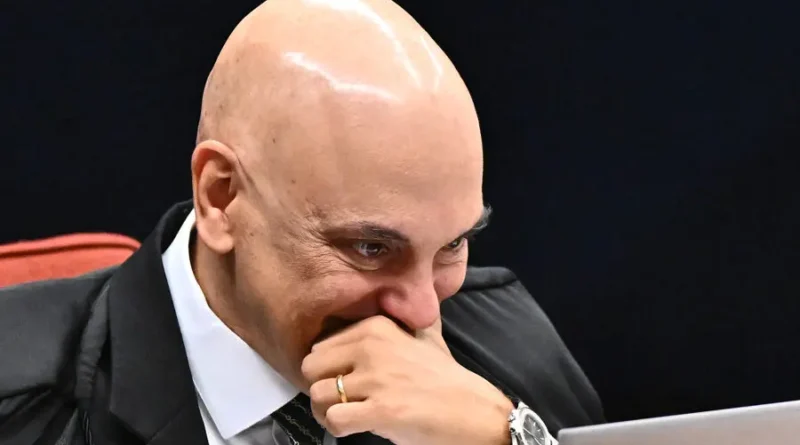
Three Acts of the Press and the Case of Alexandre de Moraes
First Act: Applauding the Supreme Court
According to journalist Luís Ernesto Lacombe, over the past seven years part of the Brazilian press endorsed all arbitrary measures of the Supreme Court, especially those of Justice Alexandre de Moraes. Thus, the dominant narrative turned the minister into a “hero of democracy,” even when decisions were seen as abusive. Therefore, the press abandoned its role of questioning and oversight, preferring instead to support the persecution of Jair Bolsonaro and his allies.
Second Act: Late Self-Restraint
Later, after Bolsonaro’s defeat, journalists began to defend a supposed “self-restraint” of the Supreme Court. However, Lacombe argues that this recognition of abuses was not accompanied by an effective rejection of past practices. Thus, crimes and illegalities were tolerated as long as they were motivated by a “good cause.” Consequently, the press legitimized the idea that the law could be applied selectively, only when convenient.
Third Act: The Banco Master Scandal
More recently, the scandal involving Banco Master and the R$ 129 million contract with Moraes’s family law firm marked what Lacombe calls the third act. According to the columnist, part of the press began to see illegalities in Moraes’s defense of the bank owned by Daniel Vorcaro. Nevertheless, he suggests that this shift may be linked to political and economic interests, such as disputes over Supreme Court appointments and suspicions involving government allies.
The Role of the Press
In summary, Lacombe accuses the press of abandoning the pursuit of truth and honesty, becoming complicit in arbitrariness. Thus, when it finally began to demand explanations from Moraes, it had already lost credibility. Therefore, the central criticism is that the press ceased to be press, turning instead into an instrument of power and narrative.
Critical Conclusion
Consequently, the three acts described—applauding illegalities, selectively accepting abuses, and belatedly covering the Banco Master case—reveal a pattern that undermines both democracy and journalistic credibility. In conclusion, the episode reinforces the need for an independent press, committed to facts and the Constitution, rather than political or economic interests.
CTA: Want to understand how the press influences public perception of the Supreme Court and democracy? Explore other articles by Pedro Freitas and keep your critical eye on media and institutions.
Source:
- Gazeta do Povo – Column by Luís Ernesto Lacombe: “Three Macabre Acts of the Press” (December 28, 2025)
https://maketruthtriumphagain.com.br/moraess-official-version-on-meetings-with-galipolo-reveals-inconsistencies/