Operation Coffee Break: When Corruption Runs in the Family
Imagine a company that jumps from $50,000 to $6 million in just 1 year and 11 months. Naturally, you’d think: “What an incredible business!” However, when you discover this company grew by selling to the government and the president’s ex-daughter-in-law is in the middle of the scheme, the story changes completely.
Unfortunately, this isn’t a hypothetical story. On the contrary, it’s exactly what the Federal Police’s Operation Coffee Break revealed this Wednesday (11/12). Consequently, once again, we see the pattern repeat: corruption, influence peddling, and direct connections to the presidential palace. After all, has the Workers’ Party really changed anything?
The Explosive Growth Nobody Can Explain
First of all, let’s look at the numbers that don’t lie. Life Educational Technology had a share capital of only $50,000 until May 2022. However, in a surprisingly short period, the company exploded.
Moreover, observe the progression: it jumped to $3.3 million still in 2022, then to $4 million in 2023, and finally reached $6 million in 2024. Therefore, we’re talking about 113-fold growth in less than two years.
The Suspicious Economic Miracle
On the other hand, anyone with basic business knowledge knows this kind of explosive growth doesn’t happen organically. Similarly, legitimate companies don’t multiply their capital by 113 times in less than two years without something very wrong happening.
Consequently, the Federal Police discovered exactly what we suspected: public contracts obtained through an illegal influence scheme. Clearly, it wasn’t business merit — it was pure and simple corruption.
Lula’s Ex-Daughter-in-Law at the Center
Now, let’s get to the central character of this story. Carla Ariane Trindade, ex-wife of Marcos Cláudio Lula da Silva (the president’s son), was the target of a Federal Police search and seizure warrant.
Moreover, here’s a revealing detail: when federal police arrived at Carla’s house in the morning, guess who was there? Marcos Cláudio himself, Lula’s son. Clearly, family proximity remains intact, even after divorce.
Carla’s Role in the Scheme
According to Federal Police investigations, Carla would be responsible for obtaining influence with the federal government. That is, she would have been hired by André Mariano, owner of Life Educational Technology, specifically to use her connections.
Consequently, the objective was clear: to favor the company in releasing resources from the Ministry of Education and the National Education Development Fund. Therefore, we’re talking about classic influence peddling.
Kalil Bittar: The Lava Jato Ghost Returns
However, the story gets even more interesting when another name appears: Kalil Bittar. For those who followed Lava Jato, this name isn’t new.
First, Kalil was a former partner of Fábio Luís, known as Lulinha, in Gamecorp. Moreover, remember the story? In Lula’s first government, Gamecorp received a $1 million investment from Oi, which mysteriously got benefits from the PT government right after the investment.
Connections That Never Die
On the other hand, there’s more: Kalil is the brother of Fernando Bittar, one of the owners of the famous Atibaia ranch. Clearly, we’re talking about that property that was used by the former president and was investigated in Operation Lava Jato.
Consequently, according to the Federal Police, Kalil had “great importance and participation in the business success” of Life Educational, “acting on behalf of André Mariano’s interests in ‘business prospecting’.” In other words, he was selling access to the government.
The $12 Million in Overpricing
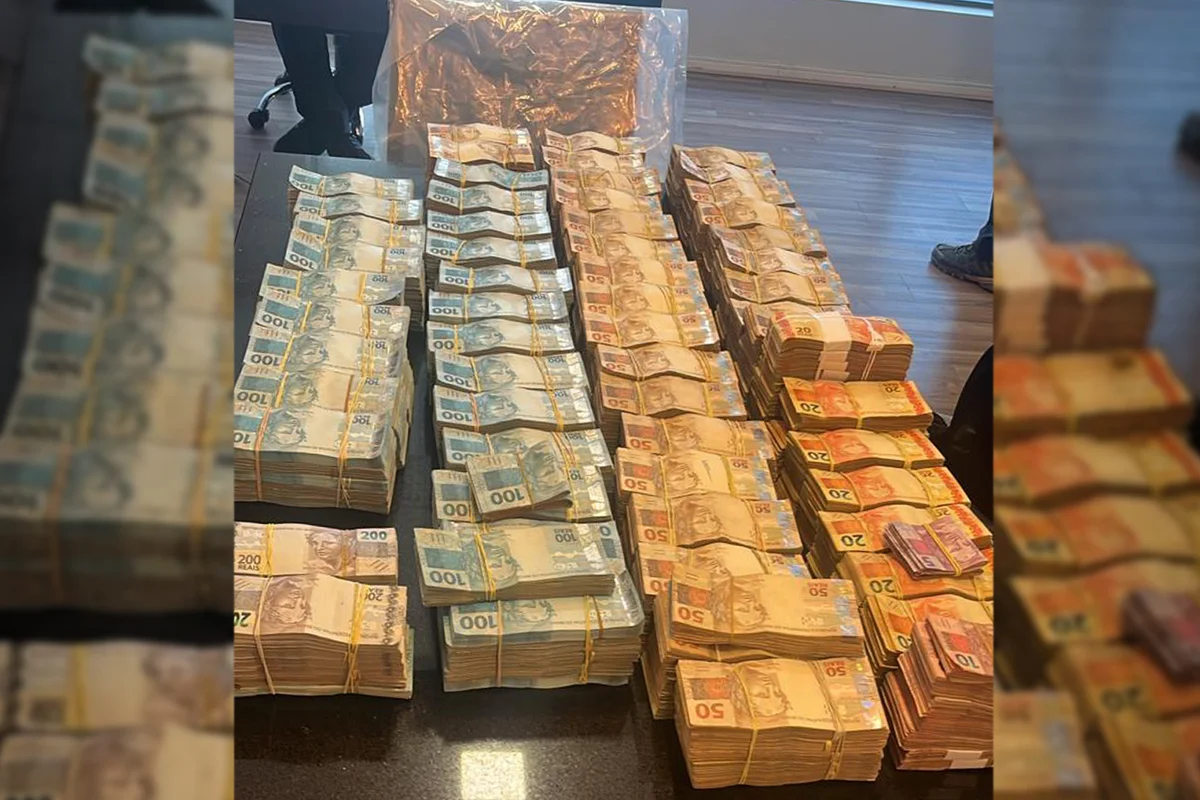
Meanwhile, let’s talk about the financial dimension of the scheme. Life Educational Technology is accused of receiving about $12 million for supplying robotics kits and books.
However, here’s the problem: according to the Federal Police, these products were overpriced. That is, municipalities in the interior of São Paulo state paid much more than they should for products worth much less.
The Classic Method
Moreover, this is exactly the pattern we’ve seen repeatedly in previous PT scandals. First, you get public contracts through political influence. Next, you overprice the products or services. Finally, you split the illicit profit with whoever facilitated the deal.
Clearly, it’s the same script from Mensalão, Lava Jato, and countless other schemes. Therefore, the question is: when will we stop pretending something has changed?
Cafu César: From Mensalão to Coffee Break
On the other hand, the list of those involved includes another name with an explosive past: Cafu César (PSB), vice-mayor of Hortolândia. Curiously, Cafu worked for José Dirceu in 2005 — exactly at the height of the Mensalão scandal.
Moreover, as secretary of Hortolândia, Cafu was received four times by Lula’s chief of staff, Marco Aurélio Ribeiro (Marcola), between October 2023 and January 2024. Therefore, we’re not talking about sporadic contacts — these were frequent meetings with the president’s main advisor.
Documented Proximity
Indeed, Marcola even recorded a video alongside Cafu, which the vice-mayor proudly displayed on social media. In the video, Cafu thanks: “We want to thank President Lula’s chief of staff, Marco Aurélio Marcola, who also made Hortolândia city a priority.”
Consequently, when someone investigated for corruption has direct and frequent access to the president’s chief of staff, it’s hard to argue there’s no connection to the presidential palace.
The Pattern That Always Repeats
Now, let’s take a step back and look at the big picture. This isn’t an isolated case — it’s part of a pattern extending over decades of the PT in power.
First, we had Mensalão in 2005. Next came Lava Jato, the biggest corruption scandal in Brazilian history. Moreover, we saw countless other smaller cases that never made headlines.
The Family That Profits Together
On the other hand, observe the family pattern. In the Gamecorp case, it was Lulinha. Now, in Operation Coffee Break, it’s the ex-daughter-in-law. Moreover, there are always “close friends” of the family involved, like Kalil Bittar.
Consequently, it’s clear we’re not talking about coincidences. On the contrary, we’re talking about a structured system of influence peddling that uses family and political connections for illicit enrichment.
The Direct Connection to the Presidential Palace
Furthermore, we can’t ignore the elephant in the room: the direct involvement of Lula’s chief of staff. Marco Aurélio Marcola isn’t just any employee — he’s the president’s main advisor.
Therefore, when this advisor has frequent meetings with someone later investigated for corruption, and even records promotional videos for that person, something is clearly very wrong.
How Far Does the President’s Knowledge Go?
Naturally, the inevitable question arises: Did Lula know? After all, we’re talking about his ex-daughter-in-law, his son’s close friend, and meetings in the presidential office.
On the other hand, even if we argue the president didn’t know the details, that’s not much better. Consequently, we’d be admitting he has no control over what happens in his own government and his own family.
Overpricing as a Method
Meanwhile, let’s detail how the scheme worked in practice. According to the Federal Police, there was manipulation of bidding processes and irregular direct contracting of companies through payment of bribes.
Moreover, the contracts involved “evidence of overpricing and payment for services not rendered.” That is, besides charging too much, in some cases they didn’t even deliver what they promised.
Who Pays the Bill
On the other hand, let’s remember who really suffers from this. It’s municipalities in the interior, with limited resources, that paid millions more for robotics kits and books. Consequently, this money was missing from other essential areas like health, security, and infrastructure.
Therefore, we’re not just talking about “abstract corruption” — we’re talking about diverted public money that made a real difference in ordinary people’s lives.
Operation Coffee Break in Numbers
Moreover, let’s dimension the Federal Police operation. Fifty search and seizure warrants and six preventive arrest warrants were served. The operations occurred simultaneously in São Paulo, the Federal District, and Paraná.
Clearly, we’re not talking about a small investigation. On the contrary, it’s a large-scale operation involving multiple states and dozens of targets.
Institutional Support
Furthermore, the operation had support from the Comptroller General’s Office and São Paulo Military Police. Therefore, multiple institutions considered the evidence serious enough to justify a coordinated action of this magnitude.
The Question That Won’t Go Away
Finally, we arrive at the central question: will there be real punishment this time? After all, we saw Mensalão result in some convictions, but many of those involved are free today.
Similarly, Lava Jato imprisoned dozens of people, but then we saw systematic process annulments and mass releases. Consequently, the sense of impunity persists.
The Cycle of Impunity
On the other hand, there’s a worrying pattern: scandal emerges, investigations happen, arrests are made, but eventually everything is annulled or minimized. Therefore, the same characters return to the political scene as if nothing had happened.
Clearly, as long as this cycle persists, there’s no real incentive to stop corruption. After all, what’s the risk if you know you probably won’t suffer lasting consequences?
Conclusion: Nothing Really Changed
In summary, Operation Coffee Break exposes an inconvenient truth: the PT hasn’t changed. Moreover, the same methods, the same family connections, the same schemes as always continue operating.
On one hand, we have a company that grew 113 times in less than two years through overpriced public contracts. On the other hand, we have the president’s ex-daughter-in-law and family friends at the center of the scheme.
Furthermore, we have documented meetings at the presidential palace with investigated individuals, promotional videos with the presidential chief of staff, and $12 million in suspicious contracts.
Consequently, the question is no longer “if” there’s systematic corruption linked to Lula’s government, but “when” we’ll stop pretending we don’t see the obvious.
Finally, as long as Brazilian society doesn’t demand real and lasting punishment for cases like this, we’ll continue seeing the same movie repeat indefinitely. After all, why stop stealing if you know you’ll probably get away with it?
Do you think there will be real punishment in this case? Has the PT’s corruption pattern changed at all? Share your opinion in the comments!
Pingback: COP30: The $800 Million Embarrassment the UN Can No Longer