
Moraes’s Decision Against the CFM Exposes Risks of Judicial Authoritarianism
The Minister’s Order
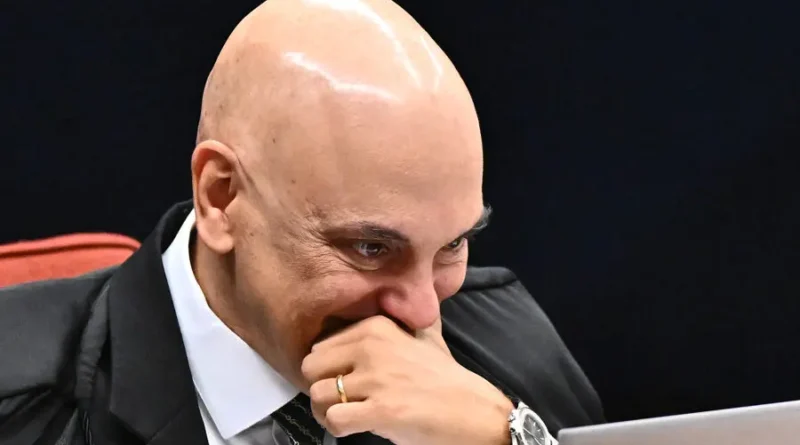
Supreme Court Justice Alexandre de Moraes annulled the inquiry opened by the Federal Council of Medicine (CFM) regarding medical care provided to Jair Bolsonaro. He ordered the president of the entity, José Hiran da Silva Gallo, to testify before the Federal Police within ten days to explain the “illegal conduct” of the institution. Additionally, Moraes prohibited any similar procedures nationwide and demanded that the DF Star Hospital deliver all medical exams conducted on Bolsonaro.
The Authoritarian Tone of the Decision
Critics argue that Moraes’s decision goes beyond the boundaries of judicial authority, turning the Supreme Court into a body that not only judges but also intimidates and controls independent institutions. Thus, summoning the president of the CFM to justify an internal inquiry is seen as an attempt to silence professional autonomy. Consequently, this measure resembles practices common in dictatorial regimes, where independent organizations are subordinated to the will of a central authority.
Comparisons with Dictatorial Regimes
Historically, authoritarian regimes such as Cuba, Venezuela under Maduro, and even the Soviet Union employed similar mechanisms: any entity that dared to question or investigate figures of the regime was immediately delegitimized and punished. Therefore, by preventing the CFM from exercising its oversight role and criminalizing its initiative, Moraes reproduces a pattern of power concentration that threatens democratic balance.
The Contrast with Other Cases
Furthermore, the decision becomes even more controversial when compared to recent episodes. Former president Fernando Collor was granted house arrest due to sleep apnea. Businessman Daniel Vorcaro, owner of Banco Master, received the same benefit even after being caught attempting to flee the country. Meanwhile, Bolsonaro, despite undergoing four surgeries in a single week, had his request denied by Moraes. Thus, the selective nature of these decisions reinforces perceptions of political persecution.
Institutional Impact
Consequently, this episode is not limited to Bolsonaro’s case. It exposes a judicial model that threatens the autonomy of professional entities and undermines trust in the separation of powers. In conclusion, when a single justice concentrates the authority to decide who may or may not investigate, democracy dangerously approaches dictatorial practices.
CTA: Want to understand how judicial decisions can compromise democracy and resemble authoritarian regimes? Explore other articles by Pedro Freitas and keep your critical eye on the Supreme Court and its political implications.
Sources:
- Gazeta do Povo – Moraes’s decision against the CFM
- Reports on house arrest cases involving Fernando Collor and Daniel Vorcaro
- Historical references to authoritarian regimes and institutional control practices
Michelle Bolsonaro Reports Jair Bolsonaro’s Fall in Prison and Questions Judicial Decisions