
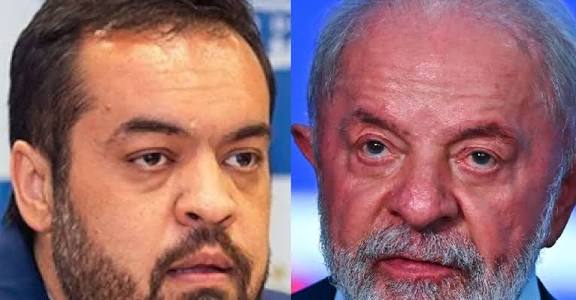
Lula’s Silence: When the President Abandons a State at War
Imagine your state just went through the deadliest police operation in its history. Furthermore, 121 people died in confrontations with criminal factions that have terrorized the population for decades. Naturally, you’d expect the president to reach out, right?
However, that’s not what happened in Rio de Janeiro. Two weeks after the historic mega-operation, Governor Cláudio Castro revealed that President Luiz Inácio Lula da Silva didn’t even pick up the phone to call. Consequently, this absence speaks volumes about the federal government’s priorities.
The Presidential Neglect That Speaks Louder
First of all, let’s look at the facts. In an exclusive interview with journalist Luiz Bacci, Castro was direct when asked about presidential contact: “Not yet, he didn’t call me.”
On the other hand, the governor received calls from three ministers: Ricardo Lewandowski (Justice), Rui Costa (Chief of Staff), and Gleisi Hoffmann (Institutional Relations). Clearly, even the ministers understood the gravity of the situation. So why didn’t the president himself do the same?
The COP30 Excuse
Diplomatically, Castro suggested that Lula’s absence might be related to COP30, held in Belém. Nevertheless, this justification doesn’t convince anyone who follows Brazilian politics.
After all, if the president has time to participate in international climate events, he certainly would have a few minutes to call the governor of one of the country’s most important states. Moreover, COP30 itself was widely criticized for low attendance of heads of state, being nicknamed “Flop30.”
When Brasília Turns Its Back on the States
Even more concerning was Castro’s response when asked if the federal government treats narcoterrorism with the same priority as the state. The answer was devastating and revealing.
“I think it’s not their focus, as it is the state government’s focus,” the governor stated. In this way, he exposed an inconvenient truth: Brasília simply doesn’t care about the war that states face daily.
The Federal Government Trapped in Bureaucracy
Furthermore, Castro went further and criticized Planalto’s limited vision: “The federal government is very focused on what is its constitutional responsibility. They still haven’t understood that states can win local battles, but the real war against organized crime needs everyone’s effort together.”
In other words, while the federal government hides behind “constitutional responsibilities,” organized crime grows stronger, buys increasingly powerful weapons, and controls entire territories. Consequently, the population pays the highest price.
The War That Brasília Pretends Not to See
On the other hand, we can’t ignore the reality of the streets. Rio de Janeiro doesn’t just face common crime — it faces structured, well-armed, and extremely violent narcoterrorism.
Similarly, other regions of the country suffer from the same problem. However, the federal government seems more interested in narrative wars than in concrete solutions.
Strategic Abandonment
Clearly, there’s a pattern here. Castro emphasized a crucial point: “You can’t win this war alone.” Therefore, when the federal government is absent, it’s not just being negligent — it’s condemning the states to failure.
Moreover, this federal absence isn’t accidental. In fact, it reflects deliberate political choices about where to concentrate efforts and resources.
The Necessary Mega-Operation
Meanwhile, let’s talk about the operation that generated this entire situation. With 121 deaths, it was the deadliest in Rio de Janeiro’s history. Naturally, critics pointed to the death toll as a problem.
However, Castro was emphatic in defending the action’s necessity: “It was a necessary operation to fulfill arrest warrants.” Indeed, this wasn’t a random action, but legal compliance against structured criminal organizations.
When Force Is Necessary
Additionally, the governor made it clear he doesn’t celebrate deaths: “I didn’t celebrate anyone’s death. You didn’t see me say we had to kill.” On the contrary, he emphasized that the priority was always to preserve lives.
Nevertheless, when criminal factions respond to arrest warrants with extreme violence, what alternative do security agents have? Simply retreat and allow organized crime to continue dominating entire communities?
The Contrast Between Rhetoric and Action
On the other hand, there’s a glaring contradiction in the federal government’s stance. Publicly, Lula and his ministers talk about public safety and combating organized crime. However, in practice, they abandon governors who are on the front lines of this war.
Similarly, the federal government spends billions in other areas, but when it comes to supporting states in fighting narcoterrorism, the resources and support simply don’t appear.
The Narrative War Versus the Real War
Furthermore, Castro touched on a sensitive point: the “narrative war.” While Brasília debates whether or not to call factions “terrorists,” these organizations continue trafficking drugs, buying military-grade weapons, and controlling territories.
Consequently, this semantic discussion seems ridiculous to those living in Rio de Janeiro. After all, if it walks like a duck, swims like a duck, and quacks like a duck, it’s probably a duck. Likewise, if organizations use terror tactics to control populations, they are terrorists.
Planalto’s Wrong Priorities
Meanwhile, let’s analyze where the federal government actually concentrates its efforts. In recent months, we’ve seen Lula more concerned with international events, overseas trips, and political agendas than with internal security.
For instance, the presidential couple has been using military bases as “vacation homes,” spending public resources on personal comfort while the people suffer with rising taxes. Moreover, COP30 in Belém cost millions from public coffers but recorded the lowest attendance of heads of state in history.
When Luxury Matters More Than Security
Indeed, there’s a flagrant inconsistency. While the government preaches “COP without luxury,” the president and first lady navigate controversial yachts and live comfortably in military bases. Meanwhile, states like Rio de Janeiro fight organized crime alone.
Therefore, it’s clear where Planalto’s true priorities lie. And unfortunately, public safety isn’t at the top of the list.
What States Can Do Alone
On the other hand, Castro demonstrated something important: determined states can achieve significant victories even without federal support. The Rio mega-operation, despite all criticism, showed that it’s possible to confront organized crime head-on.
However, as the governor himself admitted, these are just “local battles.” Consequently, the real war requires national coordination, federal resources, and an integrated strategy.
The Structural Limitation
Furthermore, states face obvious limitations. They don’t control national borders, can’t create federal legislation on terrorism, and have limited budgets. Therefore, without Brasília’s support, they’re doomed to fight symptoms instead of causes.
Similarly, organized crime doesn’t respect state borders. When Rio pressures factions, they migrate to other states. Thus, the solution needs to be national.
The Anti-Faction Bill and Federal Resistance
Meanwhile, there’s the Anti-Faction Bill in Congress, authored by federal deputy Guilherme Derrite. This project represents exactly the type of federal legislation that states need to effectively combat organized crime.
However, what has been the federal government’s stance on this initiative? Silence or passive resistance. Clearly, there’s no real political will to face the problem head-on.
When Ideology Supersedes Reality
On the other hand, this resistance isn’t accidental. In fact, it reflects an ideological view that prioritizes narratives over practical results. Consequently, while they debate terms and concepts, organized crime advances.
The Human Cost of Federal Abandonment
Finally, let’s talk about who really pays the price for this neglect. It’s not the politicians in Brasília, comfortably installed in their bubbles. On the contrary, it’s the families living in communities controlled by drug trafficking.
Moreover, it’s the police officers who risk their lives daily without adequate federal support. Likewise, it’s the merchants who pay “taxes” to organized crime to keep their businesses open.
The Invisible Victims
Furthermore, there are also invisible victims: children growing up amid violence, young people who see no future beyond trafficking, and honest workers living in constant fear.
Consequently, when Lula doesn’t call Castro after a historic mega-operation, he’s not just being rude. In fact, he’s demonstrating contempt for all these people who depend on federal leadership to have hope for a better life.
Conclusion: A Call for Federal Responsibility
In summary, Lula’s silence after the Rio mega-operation isn’t just a failure of political etiquette. On the contrary, it represents a much deeper problem: the federal government’s lack of real commitment to public safety.
Furthermore, as Castro correctly highlighted, “you can’t win this war alone.” Therefore, as long as Brasília continues treating narcoterrorism as an exclusively state problem, we’ll be condemned to repeat endless cycles of violence.
Finally, the Brazilian people deserve a president who cares about all national crises, not just those that generate favorable international headlines. Similarly, governors fighting on the front lines against organized crime deserve real federal support, not just empty rhetoric.
Meanwhile, Castro continues doing his job in Rio de Janeiro, with or without Lula’s support. However, the question remains: how long will states have to fight alone?
What do you think about the federal government’s stance? Leave your opinion in the comments!
https://maketruthtriumphagain.com.br/en/trump-processa-bbc-por/