
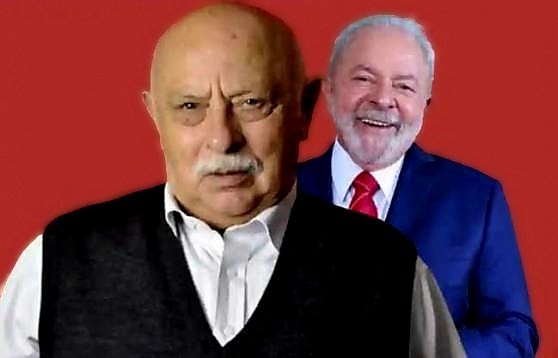
Frei Chico’s on the PT’s infiltration to return to power!
In this article, you’ll understand the context of these statements, the main points raised, and why this topic continues generating so much discussion. Additionally, we’ll analyze the political implications and recent developments. So, let’s get to the facts?
What Did Frei Chico Declare in the Interview?
First of all, it’s important to contextualize the video’s origin. The interview was originally given to Fórum magazine in April 2025. However, the content recently went viral again, generating widespread political repercussions.
In the footage, Frei Chico openly discusses political strategies that, according to him, would be necessary for left-wing parties to reach power. In this sense, he mentions the importance of “infiltrating militants” into various public institutions.
The Institutions Mentioned
During the interview, Frei Chico specifically cites some strategic areas. For example, he mentions the Judiciary, including judges, prosecutors, and attorneys. Moreover, he also references the Armed Forces as part of this long-term strategy.
According to his words, without this deliberate programming, it would be impossible to promote structural changes in the country. Therefore, he defends this approach as necessary for any transformative political project.
The Military Question in Frei Chico’s View
Criticism of Armed Forces Training
A particularly controversial point of the statements involves the Brazilian Armed Forces. In this context, Frei Chico criticizes the academic training of military personnel, arguing there’s strong American influence.
Consequently, he argues that this training would harm a more nationalist vision. Additionally, he laments the loss of what he calls “nationalist military personnel” that existed decades ago.
Questioning the Need for Armed Forces
Even more controversial, Frei Chico goes as far as questioning the very existence of the Armed Forces. In this regard, he mentions conversations where it was discussed whether Brazil really needed an army.
On the other hand, he acknowledges this would be a “dream thousands of years ahead.” Therefore, he admits the practical difficulty of implementing such a change in the short term.
The Concept of State Apparatus Capture
What Does It Mean to Capture Institutions?
First and foremost, it’s essential to understand the concept of institutional apparatus capture. Basically, it refers to the strategy of occupying key positions in public bodies with ideologically aligned people.
This way, the goal is to influence public policies and strategic decisions from within institutions. Consequently, this practice is considered problematic as it compromises the impartiality of the State.
The Gramscian Strategy
Frei Chico’s statements refer to the so-called “Gramscian strategy.” In this sense, Italian philosopher Antonio Gramsci advocated the gradual conquest of cultural and institutional power spaces.
Therefore, instead of a violent revolution, he proposed a transformation “from within” existing structures. Moreover, this approach would prioritize winning cultural hegemony before political takeover.
Social Media Repercussions
Why Did the Video Resurface?
Although the interview dates from April this year, the video gained a new wave of shares recently. Consequently, it became one of the most discussed topics on digital platforms.
On one hand, PT critics used the statements as evidence of a supposed deliberate apparatus capture strategy. On the other hand, supporters argue it’s a legitimate political strategy in democracy.
Different Interpretations of the Content
Public debate divided into distinct interpretations. First, some view the statements as a confession of an anti-democratic plan.
At the same time, others argue that occupying public positions through legal competitions and appointments is part of the democratic game. Therefore, the discussion reflects broader political divisions in Brazilian society.
The Court Injunction Obtained by Frei Chico
Censorship or Legal Protection?
Recently, Frei Chico obtained a court injunction that generated even more controversy. In this context, the decision allows the removal of content associating him with alleged diversions at INSS (National Social Security Institute).
On one hand, defenders of the measure argue it’s protection against fake news and defamation. On the other hand, critics denounce an attempt at censorship and shielding against legitimate criticism.
The Debate About Freedom of Expression
Consequently, the injunction reignited discussions about the limits of freedom of expression. In this sense, the question arises: how far does the right to criticize public figures go?
Additionally, there are concerns about using the Judiciary to silence political opponents. Therefore, the case illustrates tensions between honor protection and the right to information.
Apparatus Capture: An Exclusive Left-Wing Phenomenon?
Historical and Comparative Analysis
It’s important to contextualize that institutional apparatus capture isn’t an exclusive phenomenon of one political spectrum. Historically, governments of different ideological orientations have sought to appoint allies to strategic positions.
However, the difference would lie in the scale, systematization, and declared objectives of this practice. In this sense, Frei Chico’s statements draw attention precisely for making explicit a long-term strategy.
The Case of Universities and Culture
Beyond state institutions, Frei Chico mentions cultural and academic work. Consequently, this refers to the debate about supposed ideological hegemony in Brazilian universities.
On one hand, research shows predominance of faculty with left-wing views in some areas. On the other hand, there are questions about whether this results from coordinated strategy or natural processes of professional choice.
Implications for Brazilian Democracy
Risks of Excessive Apparatus Capture
First and foremost, it’s essential to recognize the risks when institutions lose their independence. In this context, compromised oversight bodies may fail to effectively monitor power.
Consequently, this opens space for corruption, abuse of authority, and political projects that ignore the public interest. Therefore, institutional impartiality is an essential pillar of democracy.
Balance Between Politics and Technocracy
On the other hand, it’s also necessary to recognize the legitimacy of elected governments appointing people aligned with their project. After all, democratic representation requires that public policies reflect electoral choices.
This way, the challenge lies in finding the appropriate balance. That is, allowing governability without compromising the institutional autonomy necessary in a healthy democracy.
What Do Political Science Experts Say?
Academic Views on the Topic
Political scientists point out that political appointments are common practice in world democracies. However, they emphasize the importance of clear institutional limits.
In this sense, mechanisms such as public competitions, fixed terms, and budgetary autonomy serve precisely to protect institutions from excessive political influence. Therefore, the debate shouldn’t be whether there are political appointments, but what acceptable limits are.
International Comparisons
Moreover, comparisons with other democracies show different models of relationship between politics and bureaucracy. For example, in the United States, government changes result in thousands of replacements in federal positions.
On the other hand, European countries tend to have more stable bureaucracies protected from direct political influence. Consequently, each model presents specific advantages and challenges.
How to Identify Problematic Apparatus Capture?
Warning Signs
First, appointments based exclusively on political criteria, ignoring technical qualifications, are concerning signs. Additionally, when oversight bodies stop monitoring the very government that appointed them.
Similarly, changes in regulations to benefit political allies indicate institutional compromise. Therefore, society needs to be alert to these indicators.
The Importance of Social Control
Consequently, the role of free press and organized civil society becomes fundamental. In this context, transparency and accountability are essential antidotes against harmful apparatus capture.
Moreover, mechanisms of popular participation help balance political influences in institutions. Therefore, strengthening participatory democracy is part of the solution.
The Broader Context of Political Polarization
How the Debate Reflects National Divisions
Frei Chico’s statements cannot be analyzed in isolation. In fact, they fit into a broader context of Brazilian political polarization.
In this sense, any statement related to PT or Lula tends to generate extreme reactions from both sides. Consequently, it becomes difficult to have serene, fact-based debates on the topic.
The Need for Democratic Dialogue
For this reason, it’s essential to seek information from diverse and reliable sources. At the same time, we must exercise the ability to disagree without demonizing those who think differently.
After all, democracy presupposes coexistence between distinct political projects. Therefore, the challenge is to maintain strong institutions that guarantee this coexistence, regardless of who is in power.
Conclusion: Between Political Strategy and Democratic Limits
In summary, Frei Chico’s statements about institutional infiltration have reignited a fundamental debate for Brazilian democracy. On one hand, elected governments need aligned people to implement their projects.
On the other hand, institutions need to maintain sufficient autonomy to oversee power and guarantee fundamental rights. Therefore, the balance between these needs defines the democratic health of any nation.
Consequently, it’s up to society to remain vigilant, demanding transparency and accountability from all governments. At the same time, we need to strengthen institutions and social control mechanisms.
What about you? What do you think about this debate? Do you believe there’s problematic apparatus capture in Brazilian institutions? How can we ensure public bodies serve the general interest and not partisan projects?
Want to stay informed about the country’s main political debates? Keep following our blog for balanced, fact-based analyses. After all, informed democracy is strengthened democracy!
https://maketruthtriumphagain.com.br/en/a-megaoperacao-no-rio-foi-pela-liberdade-corrupcao-e-o-desafio-da-soberania-nacional/