
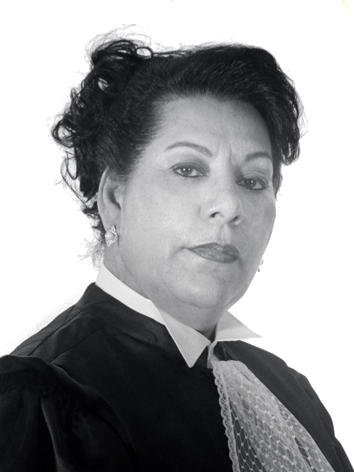
Former Brazilian High Court Justice Reveals Explosive Details: Lula’s Release Was Coordinated by Supreme Court
In an explosive interview on the Arena Oeste program, former Superior Court of Justice (STJ) minister Eliana Calmon, the first career female judge to reach a superior court in Brazil, made revelations that shake the foundations of the Brazilian judiciary. With decades of experience and credibility built over an exemplary career, Calmon didn’t mince words when describing what she calls a “judiciary swallowed by the system.”
The most impactful statements concern the release of former President Luiz Inácio Lula da Silva, which according to the magistrate, was the result of a coordinated and combined decision among ministers of the Federal Supreme Court (STF). Furthermore, she characterized the events of January 8th as a “narrative” constructed to make former President Jair Bolsonaro’s candidacy in the 2026 elections unfeasible.
Lula’s Release: A Combined Decision
When asked about who released Lula, former minister Eliana Calmon was direct and incisive. According to her, the Federal Supreme Court made this decision in a coordinated manner, not being an isolated action by Minister Edson Fachin.
Eliana Calmon’s Exact Words
“Who released Lula? The Federal Supreme Court, where I cannot place this blame on Minister Fachin. I cannot. Minister Fachin didn’t do this alone. And Minister Fachin didn’t give that vote and take it there and everyone, oh no, that was all arranged.”
These words reveal something deeply disturbing about the functioning of the country’s highest court. According to the former minister, decisions are not made independently by each magistrate, but rather through prior agreements among the ministers.
The Reasoning Behind the Release
Eliana Calmon details what would have been the thinking behind this coordinated decision:
“Bolsonaro can no longer be president in any way. Who are we going to put? The left had no one else. Everyone was compromised. What do you do? Make a poll. The only one left, Lula da Silva, but he’s convicted. How do you do it? And we’ve already judged a bunch of his cases, how do you do it? Discredit Lava Jato.”
Therefore, according to the former minister, the strategy was clear: faced with the impossibility (or unwillingness) to allow Bolsonaro to continue as president, and without other viable options on the left, the solution found was to free Lula. However, since he was convicted, it was necessary to discredit the entire Lava Jato operation to justify the annulment of sentences.
The Purposeful Discrediting of Lava Jato
The claim that it was necessary to “discredit Lava Jato” to enable Lula’s release is particularly serious. This suggests that judicial decisions of enormous impact were made not based on technical-legal criteria, but rather with political motivations.
What Was Operation Lava Jato
To contextualize the gravity of these revelations, it’s important to remember what Operation Lava Jato represented. Started in 2014, Lava Jato was the largest investigation of corruption and money laundering in Brazilian history, exposing a billion-dollar scheme involving politicians, businessmen, and construction companies.
Furthermore, the operation resulted in:
- Hundreds of convictions of politicians and businessmen
- Recovery of billions to public coffers
- Exposure of systemic corruption schemes
- Arrest of executives from the country’s largest construction companies
- Investigation of three presidents of the Republic
Consequently, discrediting an operation of this magnitude is not a side effect – according to Calmon, it was a deliberate strategy.
How the Discrediting Was Executed
Although the former minister didn’t detail all the methods used, we know that the deconstruction of Lava Jato involved several fronts:
- Questioning former judge Sérgio Moro’s impartiality
- Annulment of evidence and convictions
- Transfer of cases from Curitiba to Brasília
- Change in jurisprudence about second instance trials
- Selective leaking of conversations between prosecutors
As a result, what could be seen as independent judicial decisions gains, under the light of Eliana Calmon’s statements, a different interpretation: a coordinated plan with specific political objectives.
January 8th as a “Narrative” to Block Bolsonaro
If the revelations about Lula’s release were already explosive, what Eliana Calmon said about January 8th is equally significant. The former minister characterized the events of that day as a “narrative” constructed with a clear objective: to make Bolsonaro’s candidacy in 2026 unfeasible.
The Profile of the Protesters
Eliana Calmon questions the official “coup attempt” narrative by describing who was present that day:
“So I cannot accept that January 8th was the day when they would give the final coup. The final coup with 73-year-old women, 61-year-old women, popsicle sellers, flag sellers…”
This description raises important questions about the characterization of the events. How could it have been an “attempted coup d’état” if the participants were mostly ordinary people, elderly citizens, and informal workers?
The Finalization of a Narrative
The former minister goes further and explains what would be the true purpose of the January 8th events:
“Everything I’ve analyzed, everything I’ve seen, was a way to present to the entire nation the finalization of a narrative. This narrative that would lead to removing Bolsonaro from the 2026 elections.”
Therefore, according to Calmon, January 8th wasn’t what is officially claimed, but rather the culmination of a narrative that was already being constructed with a specific goal: to create the legal and political conditions to prevent Bolsonaro from running for president again.
American Sanctions: Hitting Ego and Wallet
Another topic addressed by Eliana Calmon was the impact of sanctions applied by the United States to STF ministers, particularly Alexandre de Moraes. The former minister assessed that these measures hit exactly where it hurts: in the magistrates’ ego and patrimony.
Minister Barroso’s Reaction
Calmon especially highlighted the reaction of Minister Luís Roberto Barroso, president of the STF:
“Minister Barroso’s attitude with all that crying… Is from someone who was really fearing something, right? And it’s not possible that they are so proud as to have no fear. Every person has fear. Every person is afraid of being hit in their honor, in their patrimony, no matter how much they deny it.”
This observation is particularly insightful. Despite the public discourse that the sanctions would have no effect, the emotional reactions of the ministers – including crying and public manifestations of indignation – suggest exactly the opposite.
What Are Magnitsky Sanctions
To better understand the impact of these measures, it’s important to understand what Magnitsky Act sanctions are. This American law allows the U.S. government to sanction foreign individuals responsible for human rights violations or corruption.
The consequences include:
- Asset freezing in the United States
- Entry prohibition in American territory
- International banking restrictions
- Difficulties in global financial transactions
- Extension to direct family members of sanctioned individuals
Furthermore, as the political analyst present in the interview highlighted, these sanctions represent “practically an economic death” for those affected by them.
Technical Analysis on Foreign Interference
During the interview, one of the analysts present made an important distinction about American sanctions. Although it’s correct, in principle, not to accept foreign political interference in Brazilian judicial decisions, what occurred was different.
The Question of Inverted Sovereignty
According to the analysis presented, the American reaction was not an attempt to interfere in the Brazilian judiciary, but rather a response to the fact that Brazilian decisions violated American sovereignty:
“The American reaction against Minister Alexandre de Moraes is because Minister Alexandre de Moraes, in his monocratic decision, which was endorsed by the Federal Supreme Court, violated the sovereignty of an American company and citizens.”
Therefore, the issue is inverted: it’s not Americans interfering in Brazil, but rather Brazil that interfered first in American companies and citizens, which generated the reaction.
The Careful Process of Magnitsky Law
Another important point highlighted is that, contrary to what some tried to suggest, the application of the Magnitsky Act is not an arbitrary decision:
“It’s a long, time-consuming, very careful process, it goes through various sectors of the American government to happen.”
Consequently, when sanctions are finally applied, it’s because there was rigorous analysis and multiple instances of the American government agreed there was basis for such action.
The Supreme That Ceased to Be Supreme
One of the deepest reflections of the interview came from the political analyst who accompanied Eliana Calmon, and which perfectly complements the former minister’s denunciations. He argued that the STF urgently needs to make a self-criticism about the role it has been playing.
The Loss of Original Function
According to the analysis presented, the Federal Supreme Court deviated from its constitutional function:
“The Supreme needs to return to being the Supreme, which deals only with constitutional issues, which doesn’t enter political questions, which really promotes pacification.”
Instead, the STF has transformed into a direct political actor, making decisions that should belong to the Legislature or Executive, and getting involved in disputes that should be resolved in the political arena, not judicial.
The Worn Institution
The result of this judicial activism has been disastrous for the institution itself:
“Today the Supreme has become a worn institution before the population, which should never have happened.”
Indeed, public opinion polls show that the population’s trust in the STF has been consistently falling, something serious for any democracy that depends on the legitimacy of its institutions.
The Need for Self-Criticism
Both Eliana Calmon and the analysts who accompanied her in the interview converge on one point: without self-criticism, there’s no possible recovery for the Brazilian judiciary.
The Question the STF Doesn’t Ask
According to the analysis presented:
“The Supreme doesn’t ask itself the real question to get the real answer. Why did this happen? If the Supreme makes a self-criticism, everything will have a chance to recover.”
However, this self-criticism cannot come alone. It needs to be accompanied by a firm stance from the National Congress in guaranteeing its own prerogatives and enforcing the separation of powers.
Interdependence vs. Independence
An important conceptual point was highlighted:
“The powers of the Republic are interdependent and not independent. They are interdependent. So, one must respect the other.”
This distinction is fundamental. The Constitution doesn’t establish completely independent powers that can do whatever they want, but rather interdependent powers that must mutually respect their competencies.
The “Institutional Mess”
The final assessment about the current state of Brazilian institutions was blunt and concerning.
The Current Diagnosis
“What has been happening in Brazil for a long time is that one is not respecting the other. And worse, the powers are not even respecting themselves. Hence this institutional mess we are immersed in.”
This description perfectly summarizes the current Brazilian institutional chaos. It’s not just about one power advancing over another, but a general deterioration of respect for constitutional norms and competencies.
The Warning About the Future
The prognosis presented was grim:
“Either Brazil stops to make an adjustment, or this will become unsustainable, it will turn into a ‘Brazuela’ with Chinese characteristics.”
The reference to Venezuela (“Brazuela”) combined with authoritarian Chinese elements paints a scenario of a country that simultaneously loses its democracy and economic prosperity – a future no Brazilian should desire.
Why These Revelations Matter
Eliana Calmon’s statements are not just another opinion about Brazilian politics. They come from someone who spent decades within the judicial system, reaching one of the highest possible positions.
The Source’s Credibility
Eliana Calmon is not a partisan political figure or an occasional commentator. She is:
- The first career female judge to reach a superior court in Brazil
- Former minister of the Superior Court of Justice (STJ)
- Known for her firm action against corruption
- Respected for her independence and institutional courage
Therefore, when someone with this background and experience makes revelations of this caliber, they cannot simply be ignored or dismissed as “conspiracy theories.”
The Impact on Institutional Trust
If what Eliana Calmon reports is true – and there are few reasons to doubt someone with her trajectory – the implications are profound:
- Judicial decisions of enormous impact were made for political reasons, not legal ones
- The country’s highest court operates through prior agreements among ministers
- The official narrative about important events may not correspond to reality
- Brazilian institutions are in an accelerated process of deterioration
Consequently, citizens who trusted the judicial system to deliver impartial justice discover that, behind the scenes, political considerations prevail.
What Can Be Done?
Faced with such serious revelations, the natural question is: is there a solution? Is it possible to reverse this situation?
The Necessary Measures
Based on the interview itself, some actions are urgent:
- Institutional self-criticism: The STF needs to recognize its excesses and functional deviations
- Strengthening Congress: The Legislature needs to enforce its constitutional prerogatives
- Mutual respect between powers: Each power must remain in its sphere of competence
- Transparency: Important decisions cannot be made in secret agreements
- Accountability: Ministers who abuse power need to answer for it
The Role of Civil Society
Furthermore, the Brazilian population has a fundamental role:
- Demand transparency and accountability from institutions
- Support legislative initiatives that limit judicial abuses
- Widely publicize and discuss these issues
- Not passively accept institutional deterioration
- Elect representatives committed to system reform
Therefore, it’s not just about criticizing and waiting for others to solve. Each citizen has responsibility in preserving democracy and the rule of law.
Final Thoughts: A Moment of Truth for Brazil
Eliana Calmon’s revelations represent one of those rare moments when someone from inside the system dares to publicly say what many suspected but few had the courage to affirm.
She confirmed that Lula’s release was not the result of impartial legal analysis, but rather a political agreement among STF ministers. She exposed that the discrediting of Lava Jato was strategic and purposeful. She frontally questioned the official narrative about January 8th, characterizing it as a construction to make Bolsonaro unfeasible in 2026.
Furthermore, both she and the analysts who accompanied her painted a grim picture of the state of Brazilian institutions – an “institutional mess” that, if not urgently corrected, could lead the country to a future of authoritarianism and economic decay.
American sanctions, far from being “undue external interference,” were a proportional response to abuses committed by Brazilian authorities against American citizens and companies. And these sanctions, despite public denials, hit exactly where it hurts: in the ego and patrimony of magistrates accustomed to impunity.
As a result, Brazil is at a critical moment. As was said in the interview, either the country makes an “adjustment stop,” with institutional self-criticism, respect for separation of powers, and accountability for those who abuse their functions, or we quickly walk toward becoming another example of a democracy that didn’t know how to preserve itself.
Eliana Calmon’s words are not alarmism – they are a warning from someone who deeply knows the system and knows exactly what is happening. It remains to be seen whether Brazilian society will have the maturity and courage to face these uncomfortable truths and demand the necessary changes.
What do you think about these revelations? Do you believe it’s possible to recover the credibility of the Brazilian judiciary? Share your opinion in the comments and help expand this fundamental debate for the country’s future!
Sources and References:
https://maketruthtriumphagain.com.br/en/rio-de-janeiro-vive-cenario-de-guerra-com-mais-de-60-mortos-enquanto-governo-federal-se-omite-da-crise/