
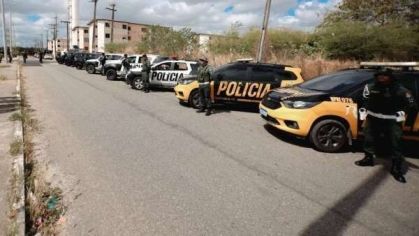
Ceará: Ghost Towns and the Narcoterrorism Brazil Insists on Ignoring
Meanwhile, 30 families abandoned their homes in Ceará for fear of execution. However, the federal government continues refusing to classify these organizations as terrorist groups. After all, how many “ghost towns” need to appear before authorities recognize the obvious truth: we’re under terrorist attack?
In this way, the Pacatuba case reveals three critical simultaneous failures. First of all, state failure to protect citizens. Moreover, terrorist actions by criminal factions. Finally, the suicidal stubbornness of not calling terrorism by its name.
42 Arrested, But How Many Families Have Already Lost Everything?
First of all, official numbers seem positive. Between August and November 2025, Ceará authorities arrested 42 people involved in forced displacement of residents. Moreover, the most recent operation captured six suspects in Pacatuba and Maranguape.
However, these numbers hide a devastating humanitarian tragedy. After all, while we arrest 42 criminals, hundreds of families have already been expelled from their homes. Therefore, the math is simple and brutal: arrests don’t compensate for installed terror.
The Pacatuba Case: A “Ghost Town”
Especially shocking is the situation in Jacarezal neighborhood in Pacatuba. Consequently, about 30 families completely abandoned their residences. Additionally, the place is now known as a “ghost town” – a term that should shame any authority.
First of all, imagine the scene: entire houses abandoned in haste. Moreover, furniture, photographs, memories left behind. Additionally, children torn from schools, adults losing jobs. Finally, families destroyed because the State failed in its most basic function: protecting them.
Therefore, when we read “ghost town,” we’re not talking about a horror movie. Actually, we’re talking about real terrorism practiced by organizations the government refuses to call by the correct name.
The Most Recent Arrest: Armed to the Teeth
Last Thursday (6), police arrested a 25-year-old man in Pacatuba. According to investigations, he actively participated in Jacarezal expulsions. Moreover, when captured, he was heavily armed.
The Arsenal Found
With the suspect, authorities seized:
- First of all, a 9mm pistol – restricted use weapon
- Moreover, 71 intact ammunition rounds – quantity indicating preparation for prolonged confrontation
- Additionally, the criminal already faced charges for criminal organization, illegal weapon possession, drug trafficking, and receiving stolen goods
Therefore, we’re talking about an individual deeply inserted in organized crime. Consequently, armed like a soldier in a war zone. Finally, operating freely until an anonymous tip allowed his capture.
The Uncomfortable Question
However, a fundamental question arises: if this criminal already faced multiple serious charges, why was he free terrorizing families? Moreover, how many like him operate freely while government debates legal technicalities?
Therefore, the system failed even before expulsions began. Consequently, 30 families paid the price of this failure with their homes and dignity.
Maranguape: Five Arrested, But Operation Continues
Besides Pacatuba, authorities arrested five men in Maranguape on Wednesday (5). In this context, suspects were threatening residents and openly selling drugs.
What Was Seized
During the operation, police found:
- First of all, 55 grams of cocaine
- Moreover, 7 grams of marijuana
- Additionally, 5 grams of crack
- Consequently, six cell phones used in criminal operations
- Finally, complete drug trafficking materials
Therefore, it wasn’t an improvised operation. Actually, it was a consolidated drug trafficking and terror structure. Consequently, it operated openly, threatening residents daily.
The Criminals’ Profile
The five arrested are between 20 and 37 years old. Moreover, one of them, 25 years old, already had trafficking record. Therefore, once again we find repeat offenders operating freely.
Additionally, all were charged with trafficking, trafficking association, and criminal organization. Consequently, arrests were converted to preventive detention. Finally, they await trial – but for how long will they stay imprisoned?
The Terrifying Pattern: How Forced Displacement Works
However, we need to understand how terrorists operate to expel families. After all, this knowledge reveals why classification as terrorism is urgent and correct.
First Phase: Intimidation
First of all, criminals choose strategic territories for expansion. Moreover, they identify most vulnerable families for initial attacks. Additionally, they begin systematic psychological terror campaign.
In this context, threats include:
- First of all, direct messages warning family must leave
- Moreover, threats to children when going to school
- Additionally, persecution of family members at work and commerce
- Consequently, ostentatious weapon display to intimidate
Therefore, families live constant terror even before any physical violence. Consequently, many abandon homes at this stage to protect children.
Second Phase: Violence Escalation
However, when intimidation doesn’t work, terrorists escalate violence. In this way, they move from threats to concrete actions:
- First of all, shots fired at residences during dawn
- Moreover, invasions to “warn personally”
- Additionally, physical assaults against family members
- Consequently, property destruction – burned cars, broken windows
- Finally, exemplary executions of those who resist
Therefore, families face impossible choice: lose everything or lose life. Consequently, most choose to flee, creating “ghost towns”.
Third Phase: Territorial Consolidation
Finally, after expelling residents, terrorists consolidate territorial control. In this way, they transform abandoned residences into:
- First of all, drug selling points
- Moreover, weapons and ammunition depots
- Additionally, torture houses for enemies
- Consequently, bases for expansion into new territories
Therefore, each “ghost town” represents terrorist victory. Consequently, it strengthens factions while weakening the State.
This Is Terrorism: Stop Calling It Something Else
Certainly, time has come to end euphemisms and convenient technicalities. After all, what happens in Ceará – and throughout Brazil – is pure and simple terrorism.
Comparison with Recognized Terrorism
First of all, compare Brazilian factions’ tactics with recognized terrorist groups:
ISIS in Middle East:
- Controls territories by force ✓
- Expels local populations ✓
- Uses extreme violence to intimidate ✓
- Finances operations with crime ✓
Factions in Ceará:
- Controls territories by force ✓
- Expels local populations ✓
- Uses extreme violence to intimidate ✓
- Finances operations with trafficking ✓
Therefore, what’s the practical difference? Consequently, why is one terrorism and the other not? Finally, the answer is simple: there’s no difference. Moreover, refusal to classify as terrorism only protects criminals.
Brazilian Law Is Wrong
However, status quo defenders cite the Anti-Terrorism Law (Law 13.260/2016). In this sense, they argue factions don’t fit because objectives are “economic, not ideological”.
But after all, does this distinction make any practical sense? Certainly not for the 30 families expelled from Pacatuba. Moreover, not for merchants forced to close shops. Additionally, not for children traumatized by death threats.
Therefore, when terrorists expel families to control territory, motivation is irrelevant. Consequently, result is identical: generalized social terror – exactly what law defines as terrorism.
State Failure: Where Government Went Wrong
Certainly, we need to hold accountable those who failed to protect citizens. In this sense, several government failures allowed us to reach “ghost towns”.
Failure 1: Deficient Intelligence
First of all, 30 families aren’t expelled overnight. Actually, process takes weeks or months. Therefore, where was police intelligence before situation exploded?
Moreover, criminals operated openly, threatening residents publicly. Consequently, authorities should have detected and acted preventively. However, they waited until “ghost town” creation to react.
Failure 2: Inadequate Policing
Additionally, areas under terrorist threat need ostensive policing. However, terrorists operated freely in Jacarezal. Therefore, police presence was clearly insufficient.
Moreover, even after first expulsions, government didn’t increase policing. Consequently, remaining families continued vulnerable. Finally, complete neighborhood abandonment was predictable and avoidable result.
Failure 3: Slow and Permissive Justice
Additionally, captured criminals quickly return to streets. In this sense, the 25-year-old suspect arrested in Pacatuba already faced multiple serious charges. However, he was free terrorizing families.
Therefore, judicial system prioritizes criminals’ rights over victims’ security. Consequently, terrorists operate knowing even if arrested, they’ll soon be free again.
Failure 4: Refusal to Classify as Terrorism
Finally, the biggest failure: federal government refuses to classify factions as terrorists. In this way, it prevents application of harsher legislation. Moreover, it hinders effective international cooperation.
Therefore, while Argentina, Paraguay, and United States recognize reality, Brazil protects terrorists with legal technicalities. Consequently, families continue being expelled from their homes.
The Crucial Role of Reports: Citizens Doing State’s Job
Ironically, recent arrests only happened thanks to anonymous tips. In this sense, Pacatuba suspect was captured after information to Crime Stoppers 181.
The Absurd Inversion
However, this reveals absurd role inversion. After all, terrorized citizens need to risk lives reporting, while State should protect them proactively.
Moreover, residents who report run enormous risk. Consequently, if terrorists discover informer’s identity, reprisals are brutal. Therefore, government places public security weight on victims’ shoulders.
How to Report Safely
Despite risks, reports are crucial. In this way, authorities provide channels:
- First of all, Crime Stoppers 181 – free and anonymous call
- Moreover, WhatsApp (85) 3101-0181 – encrypted messages
- Additionally, Website disquedenuncia181.sspds.ce.gov.br – online reports
Therefore, if you have information about expulsions or threats, report. Consequently, you can save families from terror. However, remember: you’re doing work that should be State’s.
Complete Numbers: Portrait of Terror
Finally, compiling official data, we have frightening portrait of situation:
Statistics from August to November 2025
- First of all, 42 people arrested for forced displacement
- Moreover, 23 of arrested already had criminal records
- Additionally, 29 search warrants executed in period
- Consequently, at least 30 families expelled just in Pacatuba
- Finally, real number of victims certainly much higher
Therefore, while we arrest dozens, hundreds suffer. Consequently, terror math favors terrorists. Finally, we need to urgently change this equation.
Comparison with Other Regions: National Problem
However, Ceará isn’t alone. Actually, forced displacement happens in multiple Brazilian states. Therefore, it’s national strategy of factions.
Rio de Janeiro
First of all, entire communities in Rio live under faction territorial control. Moreover, residents who resist are expelled or executed. Additionally, recent operation that killed 121 people occurred in territories under terrorist control.
São Paulo
Additionally, PCC practices forced displacement in strategic regions. Consequently, it systematically expands territorial control. Moreover, it uses same tactics: intimidation, violence, consolidation.
Northern Region
Finally, Amazon states face extremely serious situation. After all, factions control not just neighborhoods, but entire cities. Therefore, populations live under parallel terrorist State.
Consequently, “ghost towns” in Ceará are symptom of national disease. Moreover, disease that government refuses to correctly diagnose as terrorism.
What Needs to Change Urgently
Finally, solutions exist, but require political courage federal government lacks. In this sense, necessary changes include:
1. Immediate Classification as Terrorism
First of all, Congress must approve bills recognizing factions as terrorist organizations. Moreover, this would allow:
- Much harsher penalties for involved
- Total asset confiscation without conviction need
- Facilitated international cooperation
- Additional resources for combat
2. Effective Witness Protection
Additionally, citizens who report need real protection. Therefore, government must:
- Expand witness protection program
- Offer safe relocation for threatened families
- Guarantee absolute anonymity of informers
- Severely punish information leaks
3. Permanent Territorial Retaking
Moreover, it’s not enough to arrest terrorists sporadically. Actually, State needs to:
- Retake faction-controlled territories
- Maintain permanent police presence
- Offer quality public services
- Give economic alternatives to crime
4. Prison System Reform
Finally, prisons cannot continue as faction headquarters. Therefore:
- Isolate leaders in federal maximum security prisons
- Block prisoner communications with outside
- End privileges and internal control by factions
- Implement differentiated disciplinary regime
Final Reflection: How Long Will We Pretend It’s Not Terrorism?
Ultimately, we need to face uncomfortable truth. First of all, what factions do in Brazil is terrorism by any reasonable definition. Moreover, creating “ghost towns” by expelling families is exactly what terrorist groups do worldwide.
Therefore, continuing to refuse this classification is complicity. Consequently, each day of delay costs more destroyed families, more lost territories, more terror victims.
Finally, 42 arrests are minuscule compared to problem magnitude. However, until we recognize we face terrorism, we’ll never mobilize resources needed to win this war.
And you, do you agree this is terrorism? Do you believe government should classify factions as terrorist organizations? What would you do to protect threatened families? Do you know cases of forced displacement in your region? Share in comments – after all, this debate can save lives and homes.