Carvajal, Maduro, Lulinha, and Gilmar Mendes: Revelations and Tensions Shaping Latin American Politics
Carvajal’s Letter to Trump
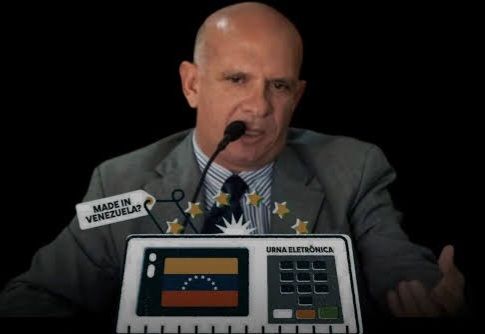
Former Venezuelan intelligence chief Hugo Carvajal sent a letter to Donald Trump denouncing Nicolás Maduro’s regime as a narcoterrorist organization. According to Carvajal, the government uses cocaine as a weapon and exports criminal networks to the United States. He also exposed alleged electoral manipulation schemes involving the company Smartmatic, which provided technical services to Brazil’s Superior Electoral Court (TSE) during the 2012, 2014, and 2016 elections. These revelations reinforce accusations of drug trafficking and corruption, raising alarms about Venezuela’s influence in Latin America, including Brazil, and its threat to U.S. security.
Maduro Confirms Conversation with Trump
In response, Nicolás Maduro confirmed that he had spoken with Trump by phone, describing the dialogue as “respectful and cordial.” The conversation took place amid tensions between the two countries, which have had no diplomatic relations since 2019, and while the United States was conducting military operations in the Caribbean against drug trafficking. Maduro expressed hope that the contact could be a step toward constructive dialogue, despite sanctions and confrontations.
Testimony on Lulinha and the “Careca do INSS”
Businessman Fábio Luís Lula da Silva, known as Lulinha and son of President Lula, allegedly received a monthly allowance of R$ 300,000 from lobbyist Antônio Carlos Camilo Antunes, nicknamed “Careca do INSS.” Testimony obtained by the Federal Police and forwarded to the INSS Parliamentary Commission of Inquiry (CPMI) also mentioned a payment of R$ 25 million and trips taken by both men. The case will be discussed in the CPMI, while Lulinha currently resides in Madrid and plans to return only after his father’s term ends.
Impeachment Request Against Gilmar Mendes
Federal deputy Bibo Nunes (PL-RS) filed an impeachment request against Supreme Court Justice Gilmar Mendes. He accused Mendes of acting in self-interest by issuing an injunction that altered impeachment rules: restricting complaints to the Attorney General’s Office, changing quorum requirements, and prohibiting punishments during proceedings. The decision was seen as an attempt at shielding and sparked backlash in the Senate. Senator Davi Alcolumbre (União-AP) accused Mendes of usurping Congress’s role and promised to introduce a constitutional amendment (PEC) to restore legislative prerogatives and limit unilateral judicial decisions.
What Is at Stake
- International security: Carvajal’s revelations highlight Maduro’s regime as a threat to the U.S. and Latin America.
- Diplomacy: Maduro’s conversation with Trump opens the possibility of negotiations despite sanctions.
- Domestic corruption: The Lulinha case increases pressure on Congress and the INSS CPMI.
- Institutional balance: The clash between Gilmar Mendes and Congress exposes tensions over judicial power limits.
Critical Conclusion
The episodes involving Carvajal, Maduro, Lulinha, and Gilmar Mendes reveal how internal scandals and external pressures intertwine in Latin American politics. From narcoterrorism and electoral manipulation to disputes between the Supreme Court and Congress, the scenario exposes institutional fragility and international tensions. The outcome is an environment marked by uncertainty, where each revelation amplifies instability and reinforces the need for democratic vigilance.
CTA: Want to follow the behind-the-scenes of Latin American politics and understand how scandals and institutional disputes shape the future? Discover other articles by Pedro Freitas and keep your critical lens sharp.
Sources:
- Gazeta do Povo – reporting by Joyce Brito
- Reuters – coverage on Venezuela and drug trafficking
- DW – international analysis
- O Globo – national coverage
Gilmar Mendes’ Smoke Screen: STF Shielding and the Risk of Judicial Dictatorship