
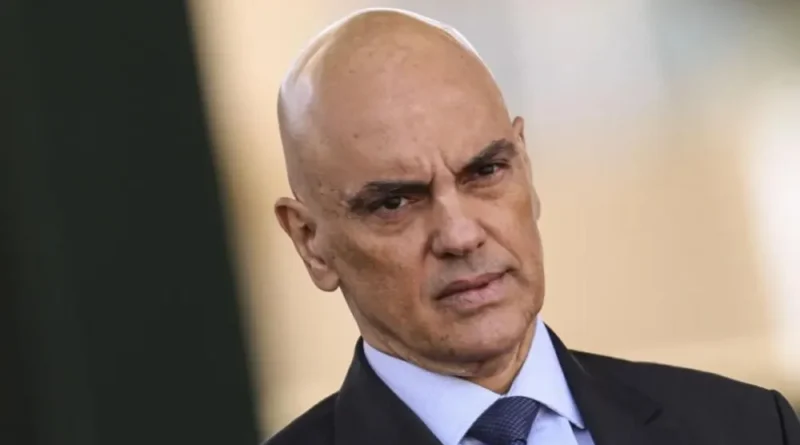
Alexandre de Moraes and Banco Master: Political Pressure, Conflict of Interest, and Institutional Risk
The Meeting with Galípolo
In July 2025, Supreme Court Justice Alexandre de Moraes reportedly requested a meeting with Gabriel Galípolo, President of Brazil’s Central Bank, to discuss the sale of Banco Master to BRB. According to journalist Malu Gaspar, Moraes asked Galípolo to approve the transaction and even stated that he “liked Vorcaro,” referring to the bank’s owner. The episode was not isolated: Moraes allegedly contacted Galípolo at least four times—three by phone and once in person—always defending the institution.
The Wife’s Contract
The case becomes even more serious because Moraes’s wife, Viviane Barci, an attorney, had a legal services contract with Banco Master worth approximately R$ 129 million. This direct financial link between the minister’s family and the institution under investigation for billion-real irregularities raises suspicions of conflict of interest and undermines the credibility of his impartiality.
Central Bank Had Already Identified Irregularities
At the time Moraes intervened, the Central Bank had already identified serious irregularities at Banco Master. Even so, the minister pressed for approval of the BRB operation. Consequently, his stance can be interpreted as an attempt to influence a technical decision in favor of private interests.
Institutional Response
After the revelations, the Central Bank officially confirmed that meetings with Moraes did occur, but claimed the subject was the Magnitsky Act, applied against the minister and his family by the United States. This justification, however, does not eliminate suspicions of undue pressure. Congress members are already discussing a CPI to investigate the relationship between the Supreme Court, the Central Bank, and Banco Master.
Risk to Democracy
The episode highlights a structural problem: when a Supreme Court justice, responsible for judging high-impact cases, acts in defense of a private institution linked to his family, the line between public duty and private interest collapses. Thus, trust in judicial impartiality weakens and institutional balance is threatened.
Critical Conclusion
By interceding with the Central Bank in favor of Banco Master, Alexandre de Moraes crossed the boundaries of his constitutional role. The direct involvement of his family in multimillion-real contracts further aggravates the perception of conflict of interest. Consequently, this case is not just an isolated episode but a warning about the capture of institutions by private interests. Therefore, Brazilian democracy requires transparency and rigorous investigation to prevent the Judiciary from becoming hostage to personal and financial ties.
CTA: Want to understand how political pressure and conflicts of interest threaten democracy? Explore other articles by Pedro Freitas and keep your critical eye on the Supreme Court and Brazil’s financial system.
Sources:
- CGN – Moraes allegedly pressured the Central Bank in favor of Banco Master
- Gazeta do Povo – Moraes’s wife had a multimillion-real contract with the bank
- Metrópoles – Central Bank confirms meetings with Moraes
- CBN – Moraes’s actions with the Central Bank before the case reached the Supreme Court
- Metrópoles – Congress members discuss a CPI on Banco Master
Hugo Motta Abdicates the Autonomy of the Chamber in Favor of the Supreme Court
Pingback: Alexandre de Moraes: From Old Lobbying to the Banco Master Case -