
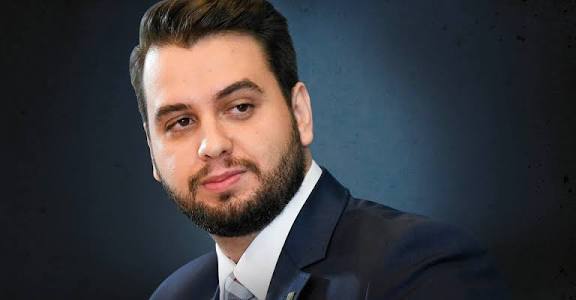
Felipe Martins and the Conviction Without Evidence: The Portrait of Judicial Dictatorship
Time as the Master of Truth
There is a saying that time is the master of truth. Thus, it is only a matter of time before the abuses committed by the Brazilian judiciary are exposed in future studies. Consequently, the names of ministers and authorities involved in this process of democratic deterioration will be recorded in history, but not in an honorable way.
The Bolsonaro Trial and the Case of Felipe Martins
The trial of Jair Bolsonaro is already considered a legal aberration. However, within this process, the case of Felipe Martins is even more scandalous. He was arrested based on a forged document, spent months in prison, and ten days in solitary confinement. Moreover, upon release, he was prohibited from giving interviews, using social media, or leaving his city. Therefore, his freedom was restricted more severely than that of common criminals.
The Ignored Contradictions
In his decision, Alexandre de Moraes claimed that Felipe Martins intended to stage a coup. Nevertheless, the speech written by Martins for Bolsonaro explicitly stated that the elections would not be contested. In addition, all the generals involved testified that Martins did not attend the meetings. Curiously, only Mauro Cid, who benefited from a plea bargain, said otherwise. Thus, evidence and testimonies were ignored to sustain a predetermined conviction.
The Absurdity of the “Evidence”
Moraes argued that Martins attended a meeting because he took an Uber to the Palácio da Alvorada on November 19. However, the meeting occurred on December 7. Consequently, the logic of the accusation collapses. Moreover, Moraes admitted that the draft used to convict Martins was not in the case files, but insisted that this did not matter. Therefore, the conviction was based on fragile accounts rather than concrete evidence.
Felipe Martins as a Living Archive
Felipe Martins represents a danger to the STF because he is a “living archive.” If he were not convicted, he could give interviews and reveal behind-the-scenes details that would further damage the Court’s image. Thus, his imprisonment functions as a silencing mechanism. Consequently, his life is at risk inside prison, since what he knows could dismantle the entire power structure.
The Impact on Democracy
This case illustrates the darkest point of persecutory justice in Brazil. Moreover, it shows how convictions without evidence have become routine. Therefore, the struggle for amnesty or dosimetry is not only about Bolsonaro or Felipe Martins but also about hundreds of people in similar situations. Consequently, Brazilian democracy remains hostage to a judiciary that concentrates absolute power.
Critical Conclusion
Convicting someone without a crime, without evidence, and against the testimonies of the prosecution itself is the ultimate proof of judicial dictatorship. Thus, the case of Felipe Martins becomes a symbol of political persecution and the urgent need for institutional reform. Therefore, this is not just about one individual but about a system that threatens everyone’s freedom. Consequently, resistance is the only way to ensure that our children and grandchildren do not inherit a captive nation.
CTA: Want to understand how cases like Felipe Martins reveal judicial capture and the urgent need for reform? Explore other articles by Pedro Freitas and keep your critical eye on the STF.
Sources:
- Gazeta do Povo
- Revista Oeste
STF Threatens to Overturn Dosimetry: Amnesty in the Senate and the Right’s Frustration