
STF Threatens to Overturn Dosimetry: Amnesty in the Senate and the Right’s Frustration
From Amnesty to Dosimetry
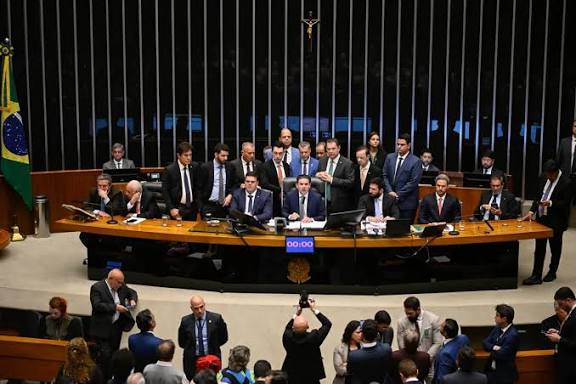
The original bill aimed at a broad amnesty. However, after maneuvers in the Chamber, rapporteur Paulinho da Força, an ally of Gilmar Mendes and Alexandre de Moraes, transformed the text into dosimetry. Thus, instead of full pardon, only sentence reductions were approved. Consequently, the Senate received a limited project, the result of political blackmail and alignment with the STF.
The Senate and the Possibility of Amnesty
Senator Esperidião Amin, the rapporteur in the Senate, declared that amendments are welcome and that amnesty could be discussed. Therefore, there is institutional room for change. On the other hand, the political strength needed to approve full amnesty still depends on public support and social mobilization.
The Streets and Public Debate
Protests against amnesty have decreased significantly. For example, on Avenida Paulista, the left gathered only 13,700 people, a 70% drop compared to the previous protest. Meanwhile, right-wing demonstrations reached 50,000 participants. Thus, the scenario shows greater mobilization in favor of amnesty than against it. Consequently, the Senate may feel more comfortable advancing with favorable amendments.
The STF’s Betrayal
Although the STF participated in the agreement to bury amnesty and approve dosimetry, ministers now signal they may overturn even the sentence reductions. According to them, retroactively altering dosimetry would violate judicial autonomy. However, the law approved is general and abstract, without naming defendants. Therefore, there is no justification for invalidating the project. Consequently, the STF’s stance appears as political betrayal and an attempt to maintain absolute control.
Critical Conclusion
Brazil faces an impasse. On one side, the Senate signals the possibility of amnesty. On the other side, the STF threatens to strike down even dosimetry. Thus, the right finds itself deceived by an agreement that may collapse. Therefore, frustration is inevitable. Nevertheless, giving up would mean accepting institutional capture. Consequently, the fight for amnesty remains the only path to restore justice and democracy.
CTA: Want to understand how the STF manipulates agreements and how the Senate could change the game with amnesty? Explore other articles by Pedro Freitas and keep your critical eye on the Judiciary and Congress.
Sources:
- Transcript on dosimetry and amnesty debate – independent blogs
- Reports from Veja and Poder360 on protests and political negotiations
Beto Louco, PCC and the Rejected Plea Bargain: When the PGR Protects Authorities
Pingback: Felipe Martins and the Conviction Without Evidence: The Portrait of Judicial D