End of Magnitsky Against Moraes: U.S. Retreat Does Not End Pressure and Exposes Institutional Fragility
The Treasury’s Move
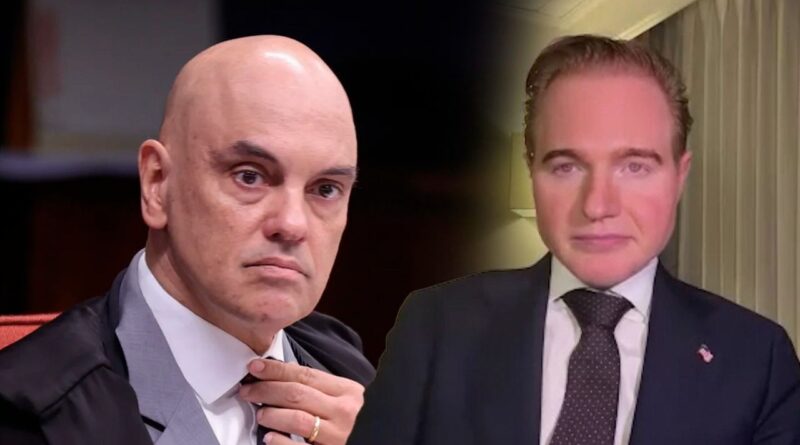
The U.S. Department of the Treasury removed Justice Alexandre de Moraes from the Magnitsky Act sanctions list. Analysts interpreted the move as a retreat. However, this decision does not end White House pressure on Brazil. According to lawyer Martin De Luca, who represents Trump Media and Rumble, sanctions were never meant to be permanent. “Sanctions are not an end in themselves. They are a form of pressure to produce change,” he explained.
What Is at Stake
De Luca emphasized that Brazilian authorities began seeking dialogue in Washington. In addition, they signaled a willingness to step back from practices described as censorship and lawfare. As an example, he cited the approval of the dosimetry bill in the Chamber of Deputies, which reduces punishments imposed by the STF on January 8 defendants. For him, this was a “visible step.” Nevertheless, it is not enough to end American demands.
A Critical View
The retreat does not erase the central issue. Moraes attempted to impose measures that affected companies and citizens inside U.S. territory. This posture invaded American sovereignty. In this sense, the sanction was legitimate because it defended rights guaranteed by the U.S. Constitution. By removing Moraes from the list, the Treasury gave the impression of acting out of political convenience rather than constitutional principle.
The Banalization of Magnitsky
The Magnitsky Act was created to protect human rights and punish abuses by foreign authorities. Yet, by retreating without structural changes in Brazil, the U.S. weakened its purpose. Moreover, the historic motto “we do not negotiate with terrorists,” so present in American culture, lost strength. Consequently, the result was a retreat that conveyed fragility and inconsistency. For many, it would have been better not to sanction at all than to retreat in this way.
Critical Conclusion
The end of sanctions against Moraes does not close U.S. demands on Brazil. On the contrary, it highlights institutional fragility in both countries. On one side, the STF continues to expand its reach over competencies and fundamental rights. On the other, the U.S. retreats from a legitimate measure and turns a constitutional defense tool into a political gesture. Therefore, the credibility of the Magnitsky Act has been weakened. The message sent to the world is one of inconsistency and loss of principles.
CTA: Want to understand how international decisions directly affect Brazilian politics and institutional credibility? Explore other articles by Pedro Freitas and keep your critical eye on the STF and its global repercussions.
Sources:
- Statements by Martin De Luca – Brazilian press
- U.S. Department of the Treasury – Magnitsky Act
https://maketruthtriumphagain.com.br/alexandre-de-moraes-and-the-absurdities-of-justice-when-even-health-becomes-a-tool-of-power/
Pingback: Dosimetry: Political Manipulation, Lies, and Congressional Omission -