
Bolsonaro’s arrest: The Witch Hunt Continues!
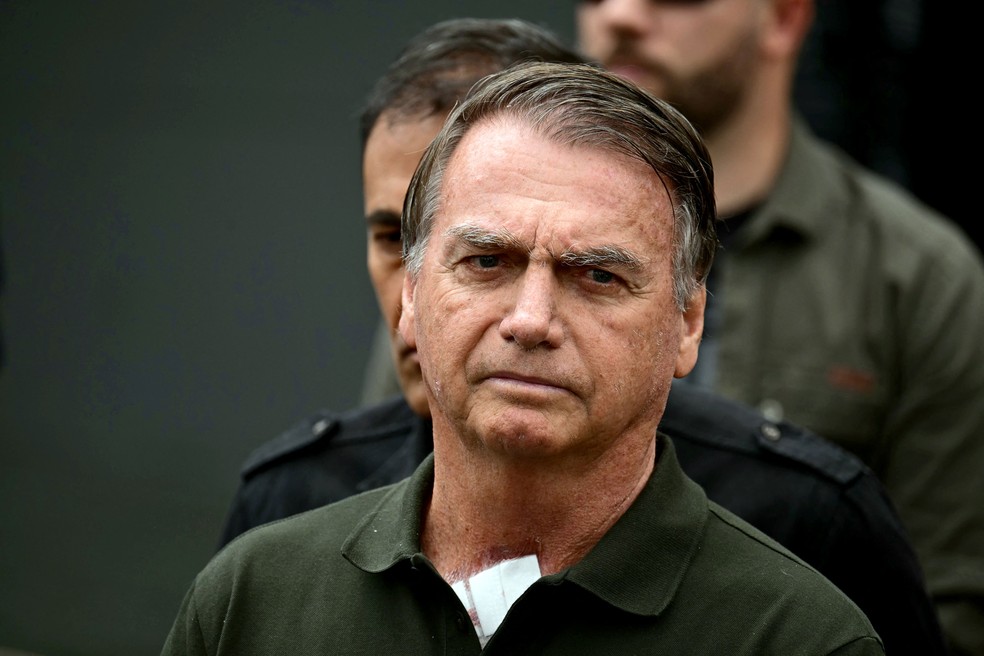
On the morning of Saturday, November 22, 2025, Brazil woke up to news that divides opinions and raises profound legal questions. For this reason, former President Jair Bolsonaro was preventively arrested by the Federal Police, by order of Supreme Court Justice Alexandre de Moraes.
However, what stands out is not just the arrest itself, but the stated reason: Bolsonaro allegedly “threatened public order” by having a vigil called in his support. This way, an inevitable question arises: since when do peaceful demonstrations justify preventive detention in Brazil?
The Context of the Arrest: From Condo to Federal Police Cell
First of all, it’s important to understand how events unfolded. Around 6 a.m., Federal Police agents arrived at Solar de Brasília Condominium, in Jardim Botânico, where Bolsonaro resides. Subsequently, the former president was taken to the Federal Police Regional Superintendence in the Federal District.
Furthermore, it’s worth noting that Bolsonaro had already been under house arrest since August 4, 2025. Therefore, he was already under severe restrictions, including wearing an electronic ankle monitor and being prohibited from using social media.
The Official Justification: “Guaranteeing Public Order”
According to Moraes’ decision, the preventive detention was ordered to “guarantee public order.” Consequently, a fundamental legal question arises: what public order would be threatened by a 70-year-old man, under house arrest, monitored 24 hours a day, and prevented from using social networks?
Even more concerning, the specific reason that allegedly motivated this escalation: the previous Friday, Senator Flávio Bolsonaro had called for a peaceful vigil in support of his father. Because of this, Moraes interpreted that there would be “risk” for participants and Federal Police agents.
Preventive Detention and Its Legal Requirements
First of all, we need to understand what preventive detention is. It’s an extreme precautionary measure provided for in the Brazilian Code of Criminal Procedure. However, it requires specific requirements and must strictly observe the principles of proportionality and necessity.
Thus, Article 312 of the CPP establishes that preventive detention can only be decreed when there is proof of the crime’s existence and sufficient indication of authorship. Moreover, it must be necessary to guarantee public order, economic order, for the convenience of criminal instruction, or to ensure the application of criminal law.
The Proportionality Problem
Nevertheless, in Bolsonaro’s case, legitimate doubts arise about the measure’s proportionality. After all, he was already under severe restrictions that drastically limited his freedom and political articulation capacity.
In this sense, it’s worth questioning: if the concern was with a possible demonstration, weren’t there other less drastic measures that could have been adopted? For example, the specific prohibition of the vigil, reinforcement of monitoring, or even calling leaders for dialogue.
The Worrying History of Measures Against Bolsonaro
To better understand the current situation, it’s necessary to analyze the history of measures imposed on the former president. Since July 18, 2025, Moraes has been applying increasingly severe restrictions.
Initially, precautionary measures were imposed including wearing an electronic ankle monitor, nighttime confinement, and prohibition of contact with diplomats. Subsequently, on August 4, came house arrest. Now, on November 22, preventive detention completes this escalation.
The Pattern of Progressive Escalation
Consequently, a worrying pattern is observed: with each alleged “violation” of precautionary measures, new, more severe restrictions are imposed. This way, a cycle is created in which the exercise of fundamental rights – such as giving interviews or communicating with supporters – is interpreted as violation of judicial measures.
For example, in August, Bolsonaro circulated around Brasília, visiting a bakery, barbershop, and PL headquarters. As a result, Moraes decreed house arrest for alleged “violation” of precautionary measures. However, the defense argued there was no clarity about the imposed limits.
The Vigil Question: Right to Assembly or Threat?
One of the most controversial points of this arrest is precisely the alleged reason. In other words, Bolsonaro was arrested because his son called for a peaceful support vigil.
However, the Federal Constitution, in its Article 5, Section XVI, guarantees that “everyone can gather peacefully, without weapons, in public places, regardless of authorization.” Therefore, the question arises: how can a constitutionally guaranteed demonstration justify preventive detention?
The Expansive Interpretation of “Public Order”
Additionally, the increasingly broad interpretation of the concept of “public order” is concerning. Traditionally, this concept refers to prevention of concrete and imminent crimes. However, in Bolsonaro’s case, it seems to be used generically to justify any restriction.
This way, a dangerous precedent is created: peaceful demonstrations supporting anyone criminally prosecuted could be interpreted as a “threat to public order.” Consequently, this would pave the way for criminalizing the very right to protest and assembly.
Reactions: Between Support and Strong Criticism
As expected, the arrest generated polarized reactions. On one hand, government supporters celebrate the measure as necessary to “protect democracy.” On the other hand, critics denounce what they consider unprecedented political persecution.
In this context, PL leader in the Chamber, Sóstenes Cavalcante, classified the arrest as “the greatest political persecution in Brazilian history.” Similarly, Congresswoman Carol de Toni stated it’s “one of the biggest absurdities ever committed by Brazilian justice.”
International Repercussions
Even more significant, the arrest is already reverberating internationally. Previously, in July 2025, the U.S. State Department classified Moraes as the “beating heart” of a “persecution” and “censorship” process against Bolsonaro.
Furthermore, President Donald Trump publicly spoke out against what he called a “witch hunt” against the Brazilian former president. In fact, the United States threatened to apply sanctions against Brazilian authorities through the Magnitsky Act, legislation that punishes human rights violators.
The Concerning Silence on Proportionality
One aspect worth highlighting is the legal community’s silence on the proportionality issue. Although there are jurists who defend Moraes’ measures, few directly address whether preventive detention is proportional in this specific case.
After all, Bolsonaro was not a fugitive, did not represent flight risk, and was already under severe restrictions. Therefore, what exactly would be the “concrete danger” that would justify imprisonment even before his conviction becomes final?
The Political Timing of the Measure
Equally questionable is the timing of the arrest. It occurs precisely when Bolsonaro was gaining growing international support and when pressures on the Supreme Court from the United States and other countries were increasing.
Thus, the perception naturally arises that the arrest would also have political motivations: silencing a growing opposition voice and sending a clear message to his supporters about the consequences of challenging the judicial status quo.
Implications for Brazilian Democracy
Regardless of each person’s political position, this arrest raises fundamental questions about the state of Brazilian democracy. Firstly, to what extent is it healthy for a single justice to have almost unlimited power to decide on arrests, censorship, and restrictions on fundamental rights?
Secondly, what is the limit between legitimate protection of democratic institutions and politicized use of the judiciary? Certainly, this is a fine line, but one that needs to be constantly evaluated and debated.
The Dangerous Precedent
Moreover, the precedent established is concerning. If a peaceful vigil can justify preventive detention, what else can? By extension, could any demonstration of support for people investigated or criminally prosecuted be interpreted as a “threat to public order”?
Consequently, a chilling effect is created on the fundamental right to free expression and assembly. In other words, people may start self-censoring out of fear of judicial reprisals.
The Defense’s Response and Next Steps
Shortly after the arrest, Bolsonaro’s defense filed appeals questioning the measure’s legality. According to the lawyers, there is no legal justification for converting house arrest into preventive detention.
Additionally, the defense argues that Bolsonaro had been complying with all judicial determinations and that the vigil call didn’t come from him, but from his son Flávio. Therefore, holding him responsible for demonstrations called by third parties would be legally unsustainable.
Legal Possibilities
In terms of legal possibilities, the defense can appeal the preventive detention in various ways. Initially, it can ask Moraes himself to reconsider the decision. Alternatively, it can submit the case to other Supreme Court justices or even to the Court’s plenary.
However, given the current composition of the Supreme Court and the history of similar decisions, chances of reversal are considered small by legal observers. Thus, Bolsonaro may remain preventively detained for an indefinite time.
Conclusion: The Challenge of Balancing Justice and Freedom
Ultimately, Bolsonaro’s arrest case exemplifies one of the oldest and most difficult dilemmas of any democracy: how to balance the need to hold criminals accountable with protecting fundamental rights and civil liberties?
On one hand, no one is above the law, and everyone must answer for any crimes committed. On the other hand, the accountability process must strictly respect the principles of due legal process, proportionality, and presumption of innocence.
In this sense, regardless of each person’s political position on Bolsonaro, it’s essential that Brazilian society asks itself: are we satisfied with the precedents being established? Are the adopted measures really proportional and necessary?
Because, ultimately, the legal tools created today for a specific case will be available tomorrow to be used against any citizen. Therefore, defending fundamental freedoms and due legal process is not a matter of left or right, but rather of preserving democracy itself.
Bolsonaro’s arrest for calling a vigil marks a concerning chapter in Brazilian legal history. It remains to be seen whether democratic institutions will have the strength to ensure that proportionality and fundamental rights prevail, or if we will continue witnessing the indefinite expansion of a single justice’s power over the freedom of millions.
Sources and References:
- Metrópoles – Preventive detention of Jair Bolsonaro. Understand
- Poder360 – Bolsonaro is arrested and taken to Federal Police Superintendence
- Metrópoles – Bolsonaro allies react to preventive detention: “Persecution”
- CNN Brasil – US State Department says Moraes persecutes and censors Bolsonaro
- BNews – Alexandre de Moraes determined respect for Bolsonaro during arrest
- Agência Brasil – Bolsonaro may be arrested by December if appeals are rejected
https://maketruthtriumphagain.com.br/en/trump-rejects-maduros-power-grab-scheme-the-dictatorship-that-wont-end/
Pingback: "Very Bad": Trump Reacts to Bolsonaro's Arrest