
Fire at COP30: Catastrophic Failure Exposes Weaknesses at World’s Largest Climate Conference
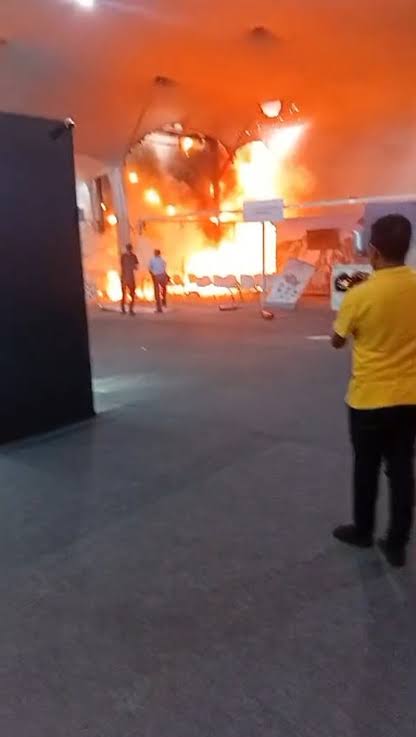
COP30, which should be the stage for the most important discussions about the planet’s climate future, experienced a moment of panic and international embarrassment this Thursday (20). A major fire hit the Blue Zone in Belém, forcing complete evacuation of the area and paralyzing climate negotiations.
The incident raises serious questions: how can an event of this magnitude suffer from basic security failures? And more importantly: what does this episode reveal about our actual capacity to organize global conferences in developing countries?
The Moment of Terror: When Fire Took Over the Blue Zone
Dramatic videos captured the exact moment when flames began spreading rapidly. The fire started behind the East African Community pavilion while a panel discussion was underway.
Within seconds, the structure was consumed by flames. The roof collapsed and panic set in among participants who desperately ran looking for exits.
Reporter Juliana Bessa from G1 Pará was on site and described scenes of chaos:
“Many people started running, desperate, not knowing what was happening. The flames were strong and high. A crowd trying to get out of here.”
Fortunately, there were no serious injuries. However, at least two people needed medical attention after inhaling toxic smoke during the emergency evacuation.
The Forced Evacuation of the Blue Zone
The so-called “Blue Zone” is the beating heart of COP30. This is where the negotiation rooms are located, where participating countries set up their stands, and where ministers and negotiators meet to discuss the future of global climate.
Therefore, evacuating this area isn’t just a security protocol — it’s completely interrupting the conference’s most important activities. And that’s exactly what happened.
Security agents acted quickly to remove everyone from the location. The fire chief ordered complete emptying of the zone while teams conducted comprehensive safety checks.
The Causes of the Fire: Between Faulty Generators and Short Circuits
Pará’s governor, Helder Barbalho, reported that initial accounts indicate the flames started at India’s stand. In an interview with journalist Andréia Sadi, he presented two main hypotheses:
- Failure in an electrical generator — essential equipment for providing power to pavilions
- Short circuit in a stand — electrical problem that quickly turned into fire
Both hypotheses point to the same problem: technical and infrastructure failures. And this is unacceptable for an event of COP30’s magnitude.
Why Did Generators and Electrical Installations Fail?
The question remains: how can temporary installations at such an important event present problems of this severity? After all, we’re talking about the world’s largest climate conference, with delegations from practically every country on the planet.
All safety measures were expected to be rigorously implemented. However, what we saw was the opposite: a vulnerable structure that put thousands of lives at risk.
International Repercussion: A Blow to Brazil’s Credibility
The fire at COP30 doesn’t just affect Belém or Pará. This episode has global repercussions and directly affects Brazil’s image as a host of major international events.
Several international media outlets have already covered the incident, questioning the country’s operational capacity and security. And, let’s face it, rightfully so.
What Are Foreign Delegations Thinking?
Imagine being a climate negotiator representing your country at a crucial conference and suddenly seeing pavilions catching fire around you. How does this affect perception about the host country’s seriousness and competence?
Additionally, many foreign participants already face logistical challenges in Belém — from hotel infrastructure to urban transportation. The fire only reinforces the narrative that perhaps Brazil wasn’t prepared to host an event of this magnitude.
Tourism Minister Downplays: “Standard Procedure”
Tourism Minister Celso Sabino was present at the location during the fire. His reaction? Try to minimize what happened by classifying the evacuation as a “standard procedure at any major event.”
With all due respect, this is a statement that borders on irresponsibility. Fires at international conferences are not standard procedures. They are serious failures that need to be investigated and corrected immediately.
Treating the episode as routine demonstrates a lack of sensitivity and understanding about the situation’s gravity. The whole world is watching, and statements like this only worsen international perception about Brazil.
The Need for Total Transparency
What should the Brazilian government do now? Simple: take responsibility, rigorously investigate the fire’s causes, and present a concrete action plan to ensure this doesn’t happen again.
Furthermore, transparency with international delegations is essential. Hiding information or downplaying what happened only generates more distrust.
COP30: Between High Expectations and Worrying Reality
COP30 was chosen to take place in Belém precisely because of the Amazon’s strategic importance in climate discussions. The city represents the fight for environmental preservation and the valorization of traditional communities.
However, hosting a conference of this scale requires much more than symbolism. Robust infrastructure, impeccable planning, and professional execution are necessary.
Belém’s Structural Challenges
Belém is an incredible city, rich in culture and history. However, like many Brazilian capitals, it faces urban infrastructure challenges. And organizing a COP requires these problems to be overcome quickly.
Since the announcement that the city would host the conference, several construction projects have begun. But were they sufficient? Today’s fire raises legitimate doubts about this.
Lessons That Must Be Learned Urgently
The fire in COP30’s Blue Zone should serve as a red alert for everyone involved in organizing the event. Some lessons are undeniable:
- Security cannot be neglected: Temporary installations require rigorous inspection and constant maintenance.
- Generators and electrical systems must be exhaustively tested: Electrical failures at crowded events are potentially fatal.
- Evacuation plans need to be clear: Although evacuation was quick, panic could have resulted in tragedy.
- Transparent communication is essential: Minimizing what happened only generates more international distrust.
What Happens Now?
Brazilian authorities promise to investigate the incident and implement additional security measures. But will this be enough to restore international delegations’ trust?
Furthermore, it’s essential that investigation results be publicly disclosed. Transparency is the only way to demonstrate that Brazil takes participants’ safety seriously.
The Cruel Symbolism: A Fire at a Climate Conference
There’s cruel irony in the fact that a fire hit precisely COP30 — a conference dedicated to discussing climate change, where forest fires are one of the main topics.
While delegations debate how to combat fires in the Amazon, a fire consumes pavilions inside the conference itself. The symbolism is devastating and reinforces the urgency of concrete actions, not just speeches.
The Amazon Burns, and Now COP30 Too
The Amazon faces historic fire records year after year. And now, ironically, the conference that should present solutions to this problem was also hit by fire.
This cannot be ignored. It’s a symbolic reminder that time is running out and that we need to act with much more seriousness and competence.
Conclusion: An Event That Cannot Be Repeated
The fire in COP30’s Blue Zone was a serious failure that exposed unacceptable weaknesses in the event’s organization. Fortunately, there were no fatalities, but the damage to Brazil’s image as host is undeniable.
Now, more than ever, total transparency in investigations is needed, urgent implementation of additional security measures, and a serious commitment to ensure nothing similar happens again.
COP30 has an immense responsibility: to define paths for the planet’s climate future. And it cannot afford to be remembered for the fires that hit it, but rather for the solutions it presented.
Brazil needs to rise to this challenge. Will we be up to it?
https://maketruthtriumphagain.com.br/en/merz-says-there-will-be-no-excuses-for-his-speech-and-he-wants/