
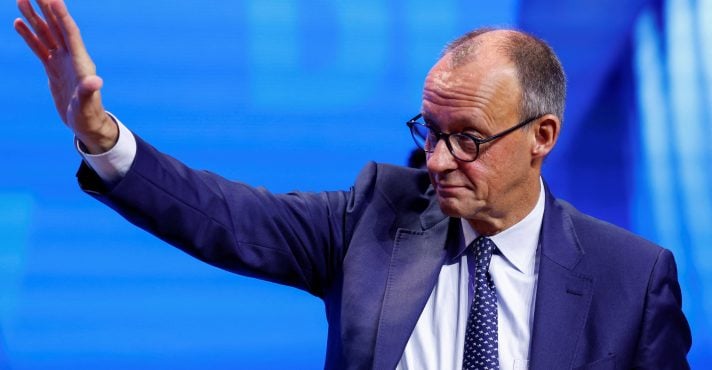
Merz says: there will be no excuses for his speech and he wants to have a “good conversation” with Lula!
International diplomacy thrives on gestures, words, and above all, mutual respect. However, when a political leader commits blunders that can be seen as disrespect toward an entire nation, the consequences go far beyond simple misunderstandings.
That’s exactly what we’re witnessing in the recent controversy involving German Chancellor Friedrich Merz and his statements about Belém, the capital of Pará state in Brazil. What should have been a strategic diplomatic visit turned into an embarrassing episode that exposes weaknesses in Brazil-Germany relations.
What Really Happened in Belém?
Last week, the German Chancellor participated in official commitments in Belém, the city set to host COP30. After returning to Germany, Merz made statements that caused immediate outrage.
According to reports, he asked journalists who accompanied him to Brazil if they would like to stay in the country. The answer, according to his words, was revealing:
“Not a single hand was raised. We were all happy to be back in Germany, away from that place.”
Naturally, these statements generated immediate reactions in Brazil. After all, how else can we interpret these words if not as a veiled criticism — or not so veiled — of the infrastructure, hospitality, and quality of life in the capital of Pará?
The Damage Control Attempt: Apology or Justification?
Faced with the negative repercussions, the German government spokesperson quickly stepped in to try to put out the diplomatic fire. According to him, Merz’s statement was “taken out of context” and was being treated in an “incriminating manner.”
The official explanation? The Chancellor was simply referring to the delegation’s exhaustion after a grueling overnight flight and an intense day of commitments. Furthermore, the spokesperson emphasized that Brazil is Germany’s “most important partner in Latin America.”
However, this attempt to soften the situation raises important questions:
- Why choose such inappropriate words? An experienced leader should know that public statements carry diplomatic weight.
- Does the context really justify it? Does fatigue explain the need to publicly disparage a Brazilian city?
- Where is the formal apology? The spokesperson made it clear: there will be no apologies.
Friedrich Merz Will Not Apologize
When asked directly whether the Chancellor intended to apologize and whether the German government recognized possible damage to bilateral relations, the spokesperson was categorical: “no to both.”
This stance, far from resolving the issue, demonstrates a concerning lack of diplomatic sensitivity. In an increasingly connected and interdependent world, dismissing strategic partners is not just a mistake — it’s a calculated risk that can have long-term consequences.
Lula’s Fitting Response
President Luiz Inácio Lula da Silva didn’t let the provocation slide. With the direct style that characterizes him, Lula responded to the German Chancellor’s statements forcefully.
According to Lula, if Merz had made better use of his stay, perhaps his perception would be different:
“He should have gone out dancing or to a bar while visiting Belém. Then he would have realized that Berlin doesn’t offer him 10% of the quality that the state of Pará and the city of Belém offer.”
This response was not just a defense of the city of Belém, but a clear message: Brazil will not tolerate disrespect, even from historical partners.
Culture, Identity, and National Pride
Lula’s statement touched on an essential point: the cultural, natural, and human richness of the Amazon region. Belém isn’t just a city — it’s a symbol of biodiversity, riverside culture, and Amazonian resistance.
Therefore, belittling Belém means belittling everything the Amazon represents for Brazil and the world. And that, let’s face it, doesn’t align with the environmental cooperation discourse that Germany so strongly advocates internationally.
The G-20 Meeting: Will It End the Controversy?
Despite the tension, Friedrich Merz stated that he had a “very good meeting” with Lula in Belém and hopes to meet him again at the G-20 Summit, which will take place in South Africa.
According to the German Chancellor, he hopes to have “another good conversation in South Africa, completely without burdens.” The phrase suggests an attempt to normalize relations, but is that enough?
The problem is that words have consequences. And in diplomacy, lost trust isn’t easily recovered with mere declarations of goodwill.
Challenges for the Brazil-Germany Relationship
Germany is indeed an important economic and political partner for Brazil. Trade relations, investments in renewable energy, and scientific cooperation are pillars of this partnership.
However, episodes like this call into question the solidity of this relationship. After all, how can you trust a partner who publicly dismisses your infrastructure and culture?
Moreover, with the growing presence of China and other countries in Latin America, Brazil has alternatives. And Germany should be aware of this.
Lessons from This Diplomatic Crisis
The episode involving Merz and Lula teaches us some valuable lessons about international relations and political communication:
- Words matter: Global leaders need to measure every public statement, especially in diplomatic contexts.
- Respect is fundamental: International partnerships are built on foundations of mutual respect and consideration.
- Apologies make a difference: Admitting mistakes is not a sign of weakness, but of political maturity.
- Cultural context is essential: Understanding the culture and sensitivities of the country being visited prevents unnecessary gaffes.
What to Expect Moving Forward?
The relationship between Brazil and Germany will certainly survive this episode. However, how both countries deal with the consequences will define the quality of this partnership in the coming years.
On one hand, Brazil has demonstrated it will not accept disrespect, even from traditional partners. On the other hand, Germany needs to evaluate whether it’s worth maintaining arrogant postures in an increasingly multipolar international scenario.
Belém Deserves Respect and Recognition
Regardless of the justifications presented by the German government, it’s important to highlight what Belém really represents.
The capital of Pará is a vibrant cultural center, gateway to the Amazon, and future host of one of the planet’s most important events: COP30. Reducing this city to “that place” demonstrates not only ignorance but also an outdated Eurocentric view.
Belém has its challenges, just like any major city in the world. But that doesn’t diminish its historical, cultural, and environmental importance.
The Importance of COP30 in Belém
It’s no coincidence that Belém was chosen to host COP30. The city symbolizes the fight for environmental preservation and the valorization of traditional Amazonian communities.
Therefore, any leader visiting Belém should do so with humility and willingness to learn, not with ready-made prejudices.
Conclusion: Diplomacy Doesn’t Mix with Arrogance
The controversy involving Friedrich Merz and his statements about Belém exposes an uncomfortable truth: even in the 21st century, some European leaders still carry colonialist and prejudiced views about developing countries.
Fortunately, today’s Brazil no longer passively accepts this type of attitude. Lula’s firm response shows that our country demands — and deserves — respect in international relations.
It remains to be seen whether Germany will learn this lesson or continue committing diplomatic blunders that only weaken its strategic partnerships. Time will tell.
What do you think about this controversy? Should Merz have formally apologized? Share your opinion in the comments!
Pingback: Fire at COP30: Catastrophic Failure Exposes Weaknesses at World's
Pingback: Trump Rejects Maduro's Power Grab Scheme: The Dictatorship