
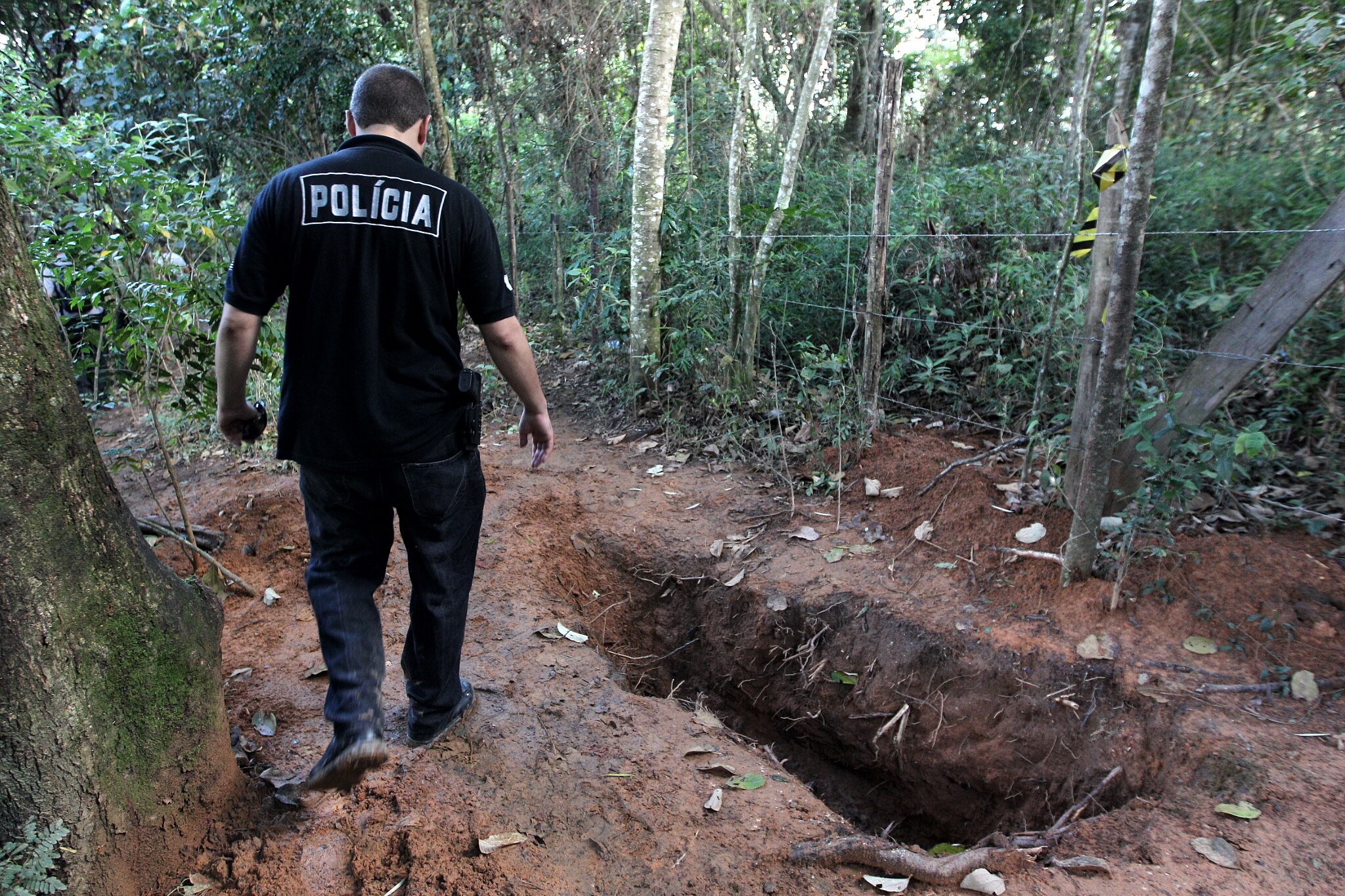
Clandestine Cemeteries: The Macabre Discovery of Brazilian Criminal Factions
First of all, what seemed like a horror movie scene became a shocking reality. Moreover, this discovery didn’t happen in isolation. On the contrary, similar cases emerged across different Brazilian states, thus revealing a macabre pattern in organized crime operations.
The Discovery at Morro do Jordão
On October 21, 2025, Rio de Janeiro’s Civil Police conducted a strategic operation at Morro do Jordão, located in the city’s western zone. Consequently, what the agents found exceeded even the darkest expectations.
Initially, the operation didn’t happen by chance. In fact, the intelligence service had received precise information about suspicious activities in the region. Therefore, when teams arrived at the location, they quickly confirmed the initial suspicions.
What Was Found
Indeed, police officers encountered a disturbing scene. In this regard, the following elements stand out:
- First of all, human remains scattered throughout the investigated area
- Additionally, charred bodies in different stages of decomposition
- Furthermore, a 100-foot-deep pit that criminals transformed into a mass grave
- Finally, at least five victims that investigators initially identified
Surprisingly, this pit had a completely different function in the past. Previously, technicians used it for electrical transmission towers. However, the Red Command transformed it into a clandestine cemetery. In this way, they managed to make evidence of their crimes disappear.
Who Are the Victims of These Cemeteries
Certainly, you might be wondering: who were these people that criminals buried clandestinely? In this context, the answer reveals much about Brazilian organized crime dynamics.
Although the Red Command (CV) is the largest criminal faction in Rio de Janeiro, it doesn’t operate alone. On the other hand, it faces fierce competition from rival groups. Especially, the Pure Third Command (TCP) represents its main threat.
The War Against Militias
Besides rivalry between factions, region residents reported another important conflict. In this way, in recent months, the Red Command waged an intense war against militia members for territorial control.
As a result of this conflict, several changes took place:
- First of all, CV conquered several areas in the southwest zone that militias previously controlled
- Moreover, Morro do Jordão itself changed hands in this dispute
- Consequently, the victims that investigators found likely include both rival traffickers and militia members
Besides the cemetery, police located the residence of one of the local drug trafficking leaders. During the search, they seized drugs, radio communicators, and even military uniforms. Therefore, this evidence proves these factions’ high level of organization.
Not an Isolated Case: Other Cemeteries Across Brazil
As shocking as it may seem, the discovery in Rio de Janeiro didn’t happen in isolation. On the contrary, similar cases emerged in different regions of the country throughout 2025. Thus, we need to analyze each one of them.
Mato Grosso do Sul: The Crime Tribunal
In February 2025, police discovered a clandestine cemetery in Rondonópolis, Mato Grosso do Sul. At this location, investigators found 11 bodies of victims of the so-called “Crime Tribunal.”
But after all, what exactly is this tribunal? Basically, it’s a parallel “justice” structure that Brazil’s main factions maintain. In this sense, both CV and PCC (First Capital Command) use this system. Thus, in this parallel tribunal:
- Initially, factions act as jury, judge, and executioner simultaneously
- Subsequently, they apply their own rules and punishments
- Additionally, they frequently use the death penalty, despite it being illegal in Brazil
- Finally, reasons for execution vary widely according to their interests
It’s important to note that Brazilian legislation doesn’t provide for the death penalty under any circumstances. However, in the “laws” that these criminal organizations created, execution is common practice. Therefore, criminals regularly apply this punishment.
São Paulo: Discovered by Chance
In June 2025, investigators discovered another clandestine cemetery in São Paulo, this time linked to PCC. Curiously, the discovery happened completely unexpectedly.
Unlike previous cases, environmental agents were investigating crimes against the environment. Unexpectedly, an anonymous resident reported the location’s existence. Subsequently, upon investigation, the agents confirmed the information they received.
Using simple tools like shovels and hoes that residents lent them, the team began excavating. Consequently, the result was frightening: investigators unearthed 12 skeletal remains at the location. All were victims of the Crime Tribunal that PCC operates.
What This Reveals About Organized Crime
Three different states face this situation – Rio de Janeiro, Mato Grosso do Sul, and São Paulo. Additionally, authorities discovered three clandestine cemeteries in 2025 alone. Therefore, what does this tell us about the country’s current situation?
First, these discoveries demonstrate the level of sophistication that Brazilian criminal organizations reached. They don’t just commit crimes, but also develop elaborate strategies. In this way, they manage to hide evidence and hinder police investigations.
Second, the existence of these cemeteries shows the brutality of conflicts between rival factions and against security forces. Criminals don’t just eliminate their victims. Additionally, they hide their bodies so families never get answers about what happened.
Why Did These News Stories Receive Little Attention?
Despite the seriousness of these discoveries, they received relatively limited media coverage. Consequently, this raises important questions about which topics gain prominence in national news.
While large-scale police operations dominate headlines, discoveries like these go almost unnoticed. However, they reveal the deep structure of organized crime in Brazil.
Factions as Terrorist Organizations?
Given these discoveries, public security experts raise an important debate. After all, should factions like CV and PCC receive classification as terrorist organizations?
In this regard, arguments in favor include several points:
- First of all, the systematic use of violence that criminals employ to intimidate populations
- Moreover, the complex organizational structure that transcends state borders
- Additionally, the capacity to challenge the State in specific territories
- Finally, the creation of parallel systems of justice and social control
On the other hand, critics argue that this classification could have unintended consequences. Especially, they fear excessive militarization of public security policies that this could cause.
What We Can Learn From These Discoveries
The discoveries of clandestine cemeteries teach us important lessons about public security in Brazil. First, they demonstrate that investment in police intelligence is fundamental. After all, all these discoveries resulted from careful investigative work that authorities conducted.
Additionally, they highlight the need for cooperation between different states. Since factions operate nationally, security forces also need to coordinate their actions. Therefore, this integration becomes essential.
Finally, these discoveries emphasize the importance of community participation. In several cases, information that local residents provided was crucial to investigations. Thus, the population becomes a fundamental ally.
Perspectives for the Future
As authorities discover more about these factions’ operations, new combat strategies enter development. However, experts agree there’s no simple solution to this complex problem.
Effective confrontation of organized crime requires a multifaceted approach. In this sense, it should include:
- First of all, the strengthening of public security institutions
- Additionally, investment in intelligence and advanced technology
- Moreover, social policies that reduce community vulnerability
- Finally, international cooperation to combat transnational networks
Certainly, the 2025 discoveries won’t be the last. As long as territorial disputes and rivalries between factions exist, new clandestine cemeteries may be under creation right now. Therefore, we need to remain vigilant.
Final Reflection
The clandestine cemeteries that authorities discovered in 2025 represent more than just evidence of crimes. In fact, they symbolize the profound challenge Brazil faces in combating organized crime.
Each body that investigators find represents a family without answers. Moreover, it represents an investigation that authorities could have prevented. Finally, it represents a life lost in the invisible war happening in Brazilian peripheries.
It’s essential that these discoveries don’t fall into oblivion or suffer minimization. On the contrary, they should serve as catalysts for real changes. Thus, we can transform the country’s public security policies.
And you, what do you think about this situation? Do you believe authorities should treat factions like CV and PCC as terrorist organizations? Additionally, how do you think the State should respond to these discoveries? Share your opinion in the comments. After all, the debate about public security needs to include all voices in society.
Pingback: COP 30: Luxury, Contradictions, and Shocking Public Spending