
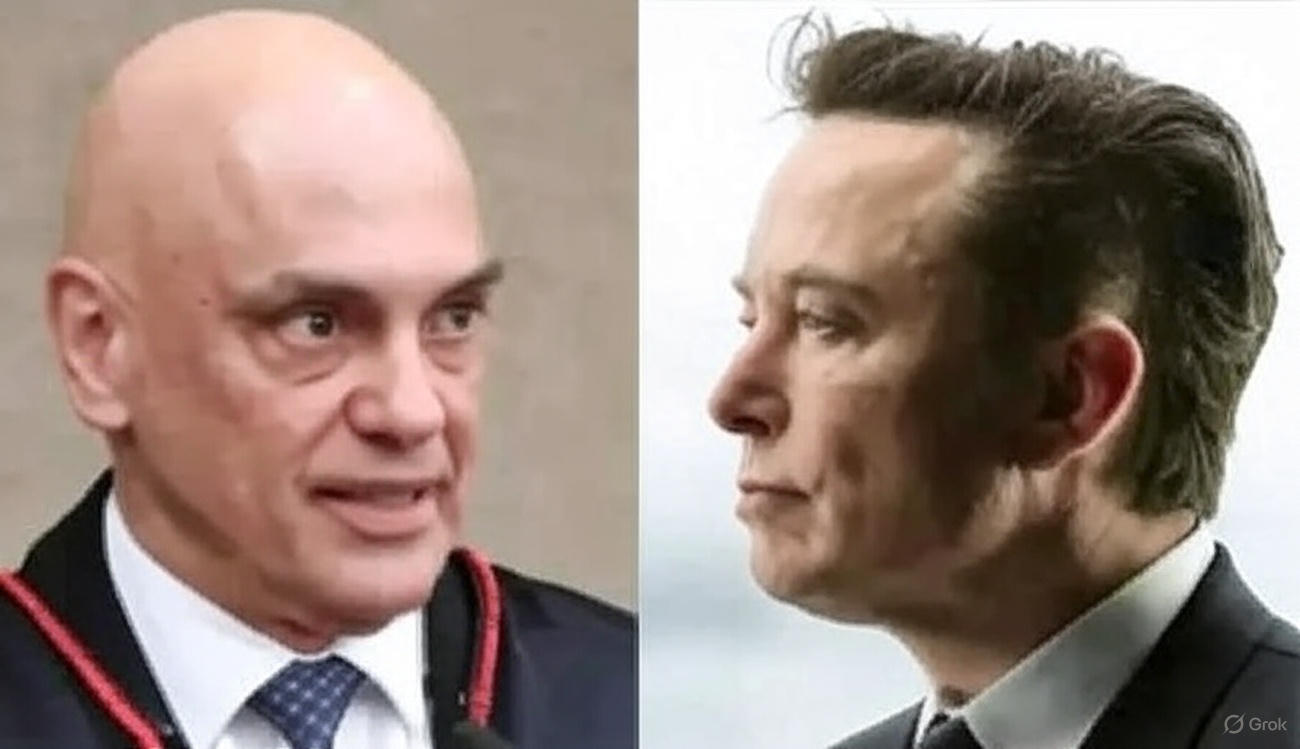
Explosive Accusation: Moraes Allegedly Threatened Musk with $20,000 Daily Fine Over Journalist’s Profile
In this article, we’ll critically analyze these accusations, question the implications for press freedom, and investigate what’s really at stake in this dispute between Brazilian judicial power and global digital platforms. Prepare yourself for an uncompromising analysis on a topic that should concern all Brazilians.
The Accusations: When Judiciary Becomes Censor?
First of all, it’s essential to understand the gravity of accusations made by Elisa Robson. According to the journalist, judicial decisions determined the blocking of her social media profile after she published investigative reports about drug trafficking, Latin American authoritarian regimes, and criminal organizations in Brazil.
Consequently, an uncomfortable question arises: since when did investigating organized crime become grounds for judicial censorship? In this sense, if the accusations are true, we’d be facing one of the most serious cases of power abuse in the country’s recent history.
The Threat Against Elon Musk
Additionally, according to Elisa, Justice Alexandre de Moraes allegedly determined a $20,000 daily fine against Elon Musk if the journalist’s profile remained available to Brazilian users. That is, approximately R$100,000 per day, totaling over R$3 million per month.
Therefore, the message would be clear: “Either you censor this journalist or pay a fortune.” Consequently, this constitutes what experts call “financial coercion” to force private companies to act as the State’s censoring arm.
Context: Why Was Elisa Robson Targeted?
The Uncomfortable Reports
To understand the case, we need to analyze the journalistic work that allegedly motivated these measures. In this context, Elisa Robson had been publishing investigations about connections between drug trafficking networks, Latin American authoritarian regimes, and Brazilian criminal factions.
That is, reports of legitimate public interest about organized crime. Therefore, the question arises: what would be the reason to censor this type of content? On the other hand, what were these investigations revealing that would bother so much?
Exile in the United States
Moreover, Elisa claims to have lived in the United States since 2023, apparently fleeing pressures suffered in Brazil. Consequently, this raises questions about the working environment for investigative journalists in the country.
Therefore, when press professionals need to leave the country for fear of retaliation, something is profoundly wrong. In this sense, would we be walking toward a state of censorship disguised as “combating misinformation”?
Freedom of Expression vs. Judicial Power: Who Wins?
The Denounced Institutional Violence
In an interview with the Pleno Time program, Elisa classified the measures as “enormous violence” and “very serious aggression” against her journalistic work. In this context, her words deserve serious reflection.
After all, when the Judiciary uses its power to silence journalists investigating organized crime, who is really being protected? On the other hand, do these measures really aim to combat “fake news” or simply silence uncomfortable voices?
The Dangerous Precedent
Additionally, if confirmed, these actions create an extremely dangerous precedent. Consequently, any journalist publishing “inconvenient” content could be targeted by judicial censorship. Therefore, we’d be establishing an environment of self-censorship for fear of retaliation.
That is, even without explicit censorship, journalists would start avoiding sensitive topics. Consequently, this undermines the very essence of investigative journalism and democracy.
The Clash with Elon Musk: Sovereignty or Authoritarianism?
The Dispute Between Brazil and Big Tech
First, it must be contextualized that Brazil isn’t the only country in conflict with large digital platforms. In this sense, several governments try to regulate online content, some legitimately, others authoritarianly.
However, using millionaire fines to force blocking of journalistic profiles is a questionable strategy. On the other hand, defenders argue that foreign companies must follow Brazilian laws. Therefore, the debate is complex and deserves nuances.
The Conflictive History
Additionally, it’s worth remembering this isn’t the first time Alexandre de Moraes has clashed with X (formerly Twitter). Consequently, the platform was temporarily blocked in Brazil in 2024, generating international controversy.
Therefore, there’s a pattern of confrontation that raises questions: is this legitimate exercise of sovereignty or an attempt to control narratives? In this sense, each Brazilian needs to reflect on which side of history they want to be.
The Questions Nobody Wants to Answer
“What’s Moraes’ Interest in My Curtailment?”
Elisa Robson herself asked the uncomfortable question: what would be the justice’s interest in censoring specifically her reports? In this context, if the content was criminal or false, why not prosecute her judicially transparently?
On the other hand, if the reports were true and of public interest, what’s the justification for blockings and threats? Consequently, the lack of transparency in these decisions feeds theories and legitimate distrust.
The International “Puzzle”
Moreover, Elisa mentions “a puzzle in formation” involving international investigations and possible sanctions from the United States. In this sense, if foreign governments identify systematic human rights violations, Brazil could face diplomatic consequences.
Therefore, these questions transcend internal politics. Consequently, the country’s international image is at stake when judicial authorities are accused of persecuting journalists.
The Fake News Inquiry: Justice Instrument or Censorship?
Questionable Origins
First, it’s important to remember that many of these measures are based on the so-called “Fake News Inquiry,” opened by Alexandre de Moraes himself in 2019. In this context, the inquiry was created without external provocation, which has already generated criticism from jurists.
Consequently, the justice accumulates functions of investigator, accuser, and judge in the same case. That is, violates basic principles of separation of powers and judicial impartiality. Therefore, every decision made in this inquiry carries this original stain.
Excessive Secrecy and Lack of Transparency
Additionally, many of the inquiry’s decisions remain sealed, preventing public analysis and adequate defense of the investigated. Consequently, this creates an environment conducive to abuses and arbitrariness.
Therefore, when citizens are punished without knowing exactly their accusations or having the right to full defense, we’re facing practices incompatible with a democratic rule of law.
Implications for Brazilian Democracy
The Silencing Effect
First, cases like Elisa Robson’s generate a “silencing effect” in the press. In this sense, other journalists observe punishments and avoid investigating sensitive topics. Consequently, self-censorship spreads even without explicit orders.
Therefore, it’s not necessary to censor everyone to create an environment of fear. Just make public examples that intimidate others. That is, classic tactic of authoritarian regimes disguised as legality.
Normalization of Power Abuse
Additionally, when society becomes accustomed to judicial censorship, the very concept of democracy erodes. Consequently, each new authoritarian measure finds less resistance, as the previous one was already normalized.
Therefore, what would previously be a national scandal becomes just “another news story.” That is, gradual desensitization that leads democratic societies to accept totalitarian practices.
Traditional Media’s Role: Complicity or Fear?
The Deafening Silence
On the other hand, the silence of much of traditional media about cases like this is notable. In this context, outlets that should defend press freedom frequently ignore or minimize accusations against judicial censorship.
Consequently, the question arises: is this silence result of fear of retaliation or ideological alignment with the measures? Therefore, regardless of the reason, it represents a serious failure of Brazilian journalism.
The Responsibility to Inform
Moreover, journalists and media outlets have special responsibility to expose power abuses, especially when involving censorship. In this sense, by remaining silent, they become accomplices to democratic erosion.
Therefore, each press organ that ignores these cases contributes to normalization of authoritarian practices. Consequently, they may one day become victims of the same system they helped consolidate.
International Perspectives: What Does the World Think?
Human Rights Organizations
First, international entities like Reporters Without Borders and Human Rights Watch have been monitoring with concern the situation of press freedom in Brazil. Consequently, the country has been losing positions in freedom of expression rankings.
Therefore, while Brazilian authorities deny censorship exists, international observers document concerning cases. That is, there’s a mismatch between official discourse and reality perceived externally.
Possible Economic Sanctions
Additionally, as mentioned by Elisa Robson, there’s possibility of economic sanctions if violations are confirmed. In this context, democratic governments can impose commercial restrictions on countries that systematically violate fundamental rights.
Consequently, beyond moral and democratic cost, there would be real economic impact. Therefore, these questions transcend political ideology and affect concrete national interests.
What Do Legal Scholars Say About the Case?
Experts’ Criticism in Law
First, several constitutionalists have spoken critically about methods employed in judicial censorship cases. In this sense, they point to violations of principles like adversarial process, full defense, and proportionality.
On the other hand, defenders argue measures are necessary to combat misinformation and protect democracy. Therefore, there’s legitimate debate among jurists, but with growing predominance of critical positions.
The Problem of the Investigator-Judge Justice
Additionally, there’s consensus that a model where the same magistrate investigates and judges is problematic. Consequently, it violates basic separation of functions that guarantees judicial impartiality.
Therefore, regardless of specific cases’ merit, the procedure itself adopted is legally questionable. That is, ends don’t justify means when these violate fundamental constitutional guarantees.
How Does This Case Compare to Other Democracies?
International Standards of Freedom of Expression
First, consolidated democracies have robust protections for press freedom. In this sense, prior censorship is prohibited and subsequent punishments require transparent judicial processes with all defense guarantees.
On the other hand, what we see in Brazil are summary blockings, sealed decisions, and threats to international platforms. Consequently, this model resembles authoritarian regimes more than liberal democracies.
Similar Cases in Other Countries
Additionally, similar practices are documented in countries like Russia, China, Turkey, and Venezuela. Therefore, being in such company should deeply concern any Brazilian democrat.
That is, when our press control methods resemble those of autocracies, we urgently need to reevaluate the path we’re following. Consequently, risk of authoritarian slide becomes real and imminent.
The Future: Where Are We Heading?
Possible Scenarios
First, if these practices continue without effective contestation, the tendency is worsening. In this sense, more journalists will be censored, more platforms threatened, and more fundamental rights violated.
On the other hand, if civil society, media, and institutions react, there’s still possibility of reversing this authoritarian drift. Therefore, we’re at a decisive moment where choices made now will define the type of country we’ll have in coming decades.
The Importance of Social Mobilization
Additionally, changes will only come with consistent popular pressure. Consequently, each citizen has responsibility to inform themselves, question, and demand respect for fundamental rights.
Therefore, we can’t afford apathy or indifference. That is, freedom of expression doesn’t defend itself – it requires constant vigilance and action from society.
Conclusion: Uncomfortable Truth That Cannot Be Ignored
In summary, Elisa Robson’s accusations against Alexandre de Moraes expose an open wound in Brazilian democracy. First, they reveal questionable use of judicial power to silence uncomfortable voices. Additionally, they demonstrate concerning normalization of authoritarian practices.
Consequently, each Brazilian needs to ask themselves: what kind of country do we want? One where journalists are censored for investigating organized crime? Or one where freedom of expression is respected even when uncomfortable?
Therefore, it’s not about defending or attacking specific individuals. Actually, it’s about fundamental principles that sustain any democracy. That is, either we defend these principles now, or we’ll gradually lose them until we wake up in an unrecognizable country.
What about you? Will you pretend not to see what’s happening? Or will you demand that authorities respect constitutional limits and fundamental rights? Because one thing is certain: silence now means complicity with democratic dismantling.
Want to keep following critical analyses about threats to democracy and freedom of expression? Follow our blog for content that’s not afraid to question power. After all, true journalism bothers, but it’s essential to keep democracy alive!
Pingback: The Scandal Nobody Wants to See: Judiciary Allows Traffickers