American General Accuses CIA of Using Public Funds to Interfere in Brazil
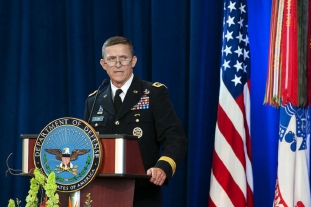
A bombshell statement has shaken social media and reignited debates about U.S. involvement in Latin America. Retired General Michael T. Flynn, former National Security Advisor to President Donald Trump, claimed that the Central Intelligence Agency (CIA) used American taxpayer money to directly interfere in Brazilian politics.
The accusation was made through the social network X (formerly Twitter) and quickly gained international attention. However, so far, there’s no documentary evidence to support these claims. Still, the statement raises important questions about transparency, foreign policy, and the role of U.S. intelligence agencies.
What Did General Michael Flynn Say?
In his social media post, Flynn didn’t hold back when criticizing the CIA and its supposed integration with the U.S. Department of State. According to him, this relationship would allow coordinated actions without proper knowledge from the government or American citizens.
“Few Americans understand how deeply the CIA is embedded within the State Department. The CIA needs to be reined in. And I guarantee Donald Trump has no idea this happened — and certainly no taxpayer knew our money was being used to overthrow the Brazilian government.”
Additionally, Flynn tagged several institutional profiles and U.S. political figures, demanding public clarification and accountability for the mentioned actions. The statement generated a wave of reactions in both the United States and Brazil.
Who is Michael Flynn?
To understand the weight of this statement, it’s important to know General Michael Flynn’s background. He’s not just any figure in the American intelligence scene.
Flynn served as director of the Defense Intelligence Agency (DIA), one of the main U.S. military intelligence organizations. Later, he became the first National Security Advisor in the Trump administration in 2017, though he remained in office for only a few weeks due to political controversies.
Therefore, his statements carry significant weight, considering his experience and privileged access to classified information throughout his military and political career.
Historical Context: CIA and Latin America
Flynn’s accusations don’t come out of nowhere. On the contrary, they touch on a deep historical wound in U.S.-Latin American relations. For decades, especially during the Cold War period, the CIA was involved in various operations across the region.
Documented Historical Examples
There are proven cases of American interference in Latin American governments throughout the 20th century. Among the most well-known examples are:
- Chile (1973): The CIA supported the military coup that overthrew President Salvador Allende
- Guatemala (1954): Secret operation to overthrow the democratically elected government of Jacobo Árbenz
- Nicaragua (1980s): Funding and training of Contra groups against the Sandinista government
- Brazil (1964): Declassified documents show American support for the Brazilian military coup
As a result, when a former intelligence officer like Flynn makes accusations about interference in Brazil, these claims resonate with well-documented historical precedents.
The Relationship Between CIA and State Department
One of Flynn’s central claims concerns the supposed deep integration between the CIA and the U.S. State Department. But what does this mean in practice?
The State Department is responsible for U.S. foreign policy, while the CIA handles intelligence operations, often secret ones. When these two institutions work in an extremely coordinated manner, concerns arise about transparency and democratic control.
Why Is This Integration Problematic?
First of all, intelligence operations are, by nature, secret. However, when they become intertwined with official foreign policy, it becomes difficult for Congress, the press, and citizens to exercise proper oversight.
Furthermore, using public resources for unauthorized or non-transparent operations raises serious ethical questions. If American taxpayers are funding actions they’re unaware of — and that may violate democratic principles in other countries — this represents a problem of government accountability.
What Would Be the Implications for Brazil?
If Flynn’s allegations were proven true, the consequences for Brazil-U.S. relations would be significant. Let’s explore some possible scenarios.
Political Impacts
First, any confirmation of foreign interference in Brazilian internal affairs would generate a major diplomatic crisis. Brazil, as a sovereign nation, has the right to conduct its political processes without external influence.
Consequently, this could lead to a cooling in bilateral relations, affecting trade agreements, security cooperation, and other aspects of the strategic partnership between the two countries.
Public Opinion Reactions
On the other hand, the Brazilian population would certainly react with outrage to confirmations that a foreign power tried to manipulate the national political scene. This could strengthen nationalist movements and create resistance to future partnerships with the United States.
Moreover, political groups from different spectrums could use this information to reinforce their narratives, whether denouncing American imperialism or questioning the legitimacy of recent political processes.
The Lack of Evidence: A Crucial Point
Despite the impact of Flynn’s statement, it’s essential to point out that, so far, there’s no concrete evidence supporting his claims. This is a critical distinction that needs to be kept in mind.
What Would Be Needed to Prove the Accusations?
For the allegations to be considered true, the following would be necessary:
- Declassified official documents showing CIA operations in Brazil
- Testimonies from other government officials confirming the actions
- Financial records demonstrating the use of public funds for these operations
- Official investigations conducted by competent authorities
Therefore, until there’s this type of proof, Flynn’s statements should be treated as unverified allegations, no matter how serious they may be.
Reactions and Next Steps
Flynn’s statement generated immediate reactions in both the United States and Brazil. Several political analysts, journalists, and citizens began debating the implications of these claims.
What to Expect Moving Forward?
First, it’s likely that investigative journalists from both America and Brazil will seek to dig deeper into these allegations. Information requests via Freedom of Information Act and similar laws may be filed.
Additionally, parliamentary committees in both countries may decide to investigate these accusations, especially if additional evidence or new testimonies emerge.
However, it’s also possible that, without concrete proof, the issue will gradually lose momentum, remaining as yet another unresolved controversy involving intelligence agencies.
Transparency and Accountability in Intelligence Operations
This episode raises broader questions about how democracies should handle intelligence operations. How can we balance the need for secrecy with the demand for transparency and democratic control?
The Oversight Dilemma
On one hand, effective intelligence operations often require secrecy. Revealing methods, sources, or targets can compromise national security and put lives at risk.
On the other hand, without proper oversight, intelligence agencies can become “states within a state,” operating with little or no accountability. This represents a fundamental risk to democracy.
Therefore, finding the right balance is a constant challenge for democratic societies, and cases like this highlight the importance of robust mechanisms for parliamentary and judicial oversight.
Final Thoughts: Between Accusations and Truths
General Michael Flynn’s statements about possible CIA interference in Brazil are undoubtedly explosive. They touch on sensitive issues regarding national sovereignty, foreign policy, and the role of intelligence agencies in modern democracies.
However, it’s crucial to maintain a balance between taking these accusations seriously and demanding concrete evidence before drawing definitive conclusions. History shows that the CIA has interfered in other Latin American countries, making these allegations plausible. At the same time, the absence of evidence in this specific case demands caution.
As a result, what remains for us is to follow the developments, demand transparency from our governments, and defend the fundamental principle that sovereign nations have the right to determine their own political destiny without external interference.
What do you think about these accusations? Do you believe there should be a formal investigation? Share your opinion in the comments and keep following this important topic!
Sources and References:
Lula in Desperation: Trump and Drug Trafficking Allegations…