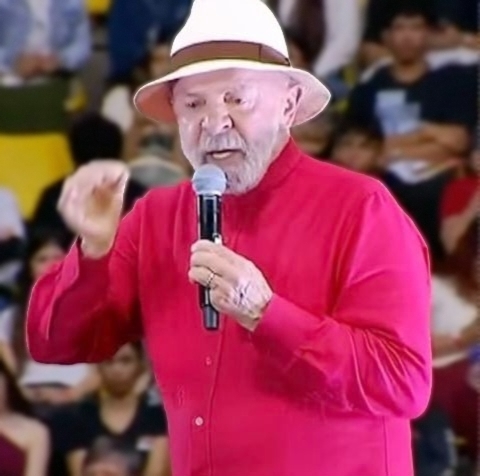
Lula in Desperation: Trump and Drug Trafficking Allegations…
A controversial statement went viral on social media and sparked intense debate: Pedro Rousseff, nephew of former President Dilma Rousseff, categorically claimed that President Lula was responsible for ending the war in Gaza. But does this narrative align with the facts? Let’s examine what really happened with calm and critical analysis.
In times of political polarization and fake news, it’s essential to separate opinion from fact, narrative from reality. That’s exactly what we’ll do in this article: an objective breakdown of who truly mediated the Gaza peace agreement and what Brazil’s actual role was in the process.
The Statement That Sparked Controversy
On Tuesday (October 14), Pedro Rousseff posted on his social media a claim that quickly spread across the internet:
“The one who ended the war in Gaza is named Luiz Inácio Lula da Silva! Trump helped finance the war. Lula made the peace deal! ‘The world needs to spend money not on weapons, but on food to end the hunger of millions of people.’”
The post triggered immediate reactions. While supporters celebrated the declaration, critics highlighted serious inconsistencies between the claim and the documented facts about the peace negotiations.
So, what really happened? Let’s turn to the facts.
The Facts: Who Actually Mediated the Peace Deal?
This is where narrative confronts documented reality. The peace agreement between Israel and Hamas that ended the war in Gaza was, in fact, mediated by the **United States**, under President Donald Trump’s administration.
The so-called “peace plan” was officially unveiled by Trump on **September 29, 2025**. From that point, U.S. diplomatic teams worked tirelessly to bring both sides to consensus.
The proposal was accepted by Hamas days after its presentation, under intense international pressure and following negotiations led by American mediators. The U.S. role in this process isn’t a matter of opinion—it’s a widely documented and internationally recognized fact.
What Does the Peace Agreement Say?
The U.S.-presented plan includes 20 key points, such as:
- Demilitarization of Hamas and other armed factions in the region
- Immediate release of hostages held for over two years
- Permanent ceasefire with monitoring mechanisms
- Large-scale international humanitarian aid
- Reconstruction of infrastructure: water, electricity, sewage, hospitals, and schools
All these points were negotiated and structured by U.S. diplomatic teams, with support from allied nations, but **without direct Brazilian participation** at the negotiating table.
What Was Brazil’s Actual Role?
None!
Diplomatic Reality
The Brazilian government itself has officially acknowledged that it remained **on the sidelines of direct ceasefire negotiations**. This isn’t a shortcoming—it simply reflects the geopolitical reality where nations with greater regional influence (such as the U.S., Egypt, and Qatar) take the lead in mediation.
Attributing the peace agreement to Brazil—and specifically to Lula—is therefore a factual distortion that ignores the actual diplomatic work carried out.
Why Are Narratives Like This Problematic?
You might be wondering: “But why is it so important to challenge this statement? Isn’t it just an opinion?”
The issue goes beyond political disagreement. Narratives that distort facts create serious problems:
1. They Undermine Real Diplomatic Work
Entire teams spent months on highly complex negotiations. Crediting someone who wasn’t directly involved devalues that concrete effort and downplays the role of mediators who risked their careers and international relationships to make the deal possible.
2. They Fuel Misinformation
When public figures make factually incorrect statements, millions may absorb them as truth. This contributes to a vicious cycle of misinformation that harms informed public debate.
3. They Further Polarize Discourse
Exaggerated claims fuel polarization. Supporters accept them uncritically; opponents attack aggressively. Rational, evidence-based discussion gets lost in the noise.
4. They Create Unrealistic Expectations
When a political leader is attributed powers they don’t possess, it sets up unrealistic expectations about their capabilities. This can lead to future frustration when real limitations become evident.
The Importance of Fact-Checking in the Digital Age
This case perfectly illustrates why fact-checking has become essential today.
With social media, anyone can make a statement that reaches millions instantly. And often, falsehoods spread faster than truth can catch up.
That’s why it’s vital to cultivate the habit of:
- Questioning extraordinary claims before sharing them
- Seeking multiple reliable sources on major events
- Distinguishing between opinion and fact in the content we consume
- Verifying the credibility of those making the claims
- Checking if official bodies confirm the information
The Broader Context: Rebuilding Gaza
While debates over who gets credit dominate social media, the real situation in Gaza demands urgent attention.
The United Nations (UN) estimates that fully rebuilding the Gaza Strip will cost approximately **$70 billion**. This staggering figure reveals the extent of destruction caused by years of conflict.
The challenges are immense:
- Thousands of homes completely destroyed
- Basic infrastructure (water, power, sewage) devastated
- Healthcare system collapsed, with hospitals in ruins
- Schools destroyed, jeopardizing an entire generation’s future
- Deep psychological trauma among the civilian population
The real question shouldn’t be “who gets the credit,” but **“how can the international community effectively help rebuild and ensure the ceasefire holds?”**
The Role of Social Media in Modern Politics
Pedro Rousseff’s statement didn’t occur in a vacuum. It fits into a broader context where social media has become the primary battlefield for political narratives.
Today, **perception created** often matters more than **factual reality**. And this is a troubling trend for democracy and healthy public discourse.
When relatives of prominent political figures make controversial public statements, they inevitably gain more visibility and credibility than the facts alone would warrant.
Lessons for All of Us
This episode offers valuable lessons for anyone consuming and sharing information online:
1. Always Question
Even if information comes from someone you admire or trust, ask questions. Does it make sense? Is it plausible? Are there reliable sources confirming it?
2. Avoid Confirmation Bias
We naturally tend to accept information that aligns with our preexisting beliefs. Actively counter this by seeking diverse sources, including those that may challenge your views.
3. Share Responsibly
Before sharing something extraordinary, do a basic check. You might unintentionally help spread misinformation.
4. Acknowledge Nuance
Reality is rarely black and white. Lula may have spoken out on Gaza without being the main mediator. Both statements can be true at once.
Conclusion: Facts Matter
In the end, this article isn’t about defending or attacking any specific political figure. It’s about something far more fundamental: **the importance of grounding our understanding of the world in verifiable facts**.
The Gaza peace deal was mediated by the United States under the Trump administration. This is a documented fact, internationally recognized, and confirmed by multiple credible sources.
Brazil played a supportive role and took public positions on the conflict, but was not at the direct negotiating table. That, too, is a fact.
Recognizing these facts neither diminishes nor elevates anyone—it simply reflects reality as it is.
And in an age where misinformation spreads at the speed of light, insisting on verifiable facts isn’t just important—it’s **essential** for maintaining healthy public debate and a functioning democracy.
Want to Better Understand International Politics?
If you enjoyed this analysis and want to develop critical thinking to better understand global political events, there are excellent courses and materials available on international relations, geopolitics, and media analysis to help you separate facts from narratives.
What did you think of this analysis? Share your thoughts in the comments! And if you value fact-based content and critical analysis, share this article with your friends. Informed debate starts with verified information.
The pursuit of truth isn’t always comfortable, but it’s always necessary. Keep questioning, keep verifying, keep thinking critically.
Pedro Freitas is an independent geopolitical analyst specialized in international strategy.
Sources:
- UOL Confere – Hugo Carvajal did not mention Lula in U.S. Justice testimony
- Agência Brasil – Experts reject calling Venezuela a narco-state as Trump claims
- El País International – Lula responds to Trump’s ‘tariffazo’ as interference
This article compiles information from reliable news agencies to contextualize the mentioned facts.
Pingback: American general says CIA