Council of Nicaea: Sophia, Jesus, and the Manuscripts the Roman Empire Buried…
By Pedro Freitas |
Updated on 07/10/2025
The Council of Nicaea: The Turning Point That Buried Gnostic Truth
In 325 CE, Emperor Constantine gathered bishops in Nicaea to “unify” Christianity. Sounds noble, right? But in reality, it was there that political decisions shaped the official doctrine, silencing dissenting voices. The main focus was to combat Arianism, but myths and facts intertwine: Gnostic texts like the Gospel of Thomas and the Gospel of Mary Magdalene were labeled heretical and banned.
Why? Because Gnosticism viewed the world radically: not as the perfect creation of a good God, but as the flawed work of an inferior demiurge. In this view, Jesus was a messenger of true light, bringing gnosis—the saving knowledge. Influenced by imperial agendas, the Council opted for a more “controllable” narrative, burning or hiding manuscripts that challenged centralized power.
The Nag Hammadi Discovery: Manuscripts That Defied Oblivion
Fast forward to 1945 in Egypt. A farmer named Muhammed Ali al-Samman stumbles upon a clay jar near Nag Hammadi. Inside? 13 papyrus codices containing 52 Gnostic texts, dated to the 4th century—a whole library of early Christianity!
These manuscripts, hidden by Gnostic monks fleeing persecution, include gems like the Gospel of Thomas (Jesus’ secret sayings) and the Apocryphon of John. They depict a mystical Jesus, a teacher of esoteric cosmology, long before the Council of Nicaea. Why were they buried? To protect the knowledge from destruction by the emerging Church.
Here’s a quick list of Nag Hammadi’s treasures that change everything:
- Gospel of Thomas: 114 logia (sayings) of Jesus, free of miracles—pure focus on inner enlightenment.
- Gospel of Philip: Speaks of Sophia as Jesus’ spiritual companion, echoing the “bride of Christ.”
- On the Origin of the World: Reveals Gnostic creation myths, with Sophia as the central figure in the fall and redemption.
This discovery wasn’t accidental; it was a cry from the past against the official narrative. But the Vatican? Oh, they knew more than they let on.
Sophia: The Fallen Wisdom and Her Sacred Union with Jesus
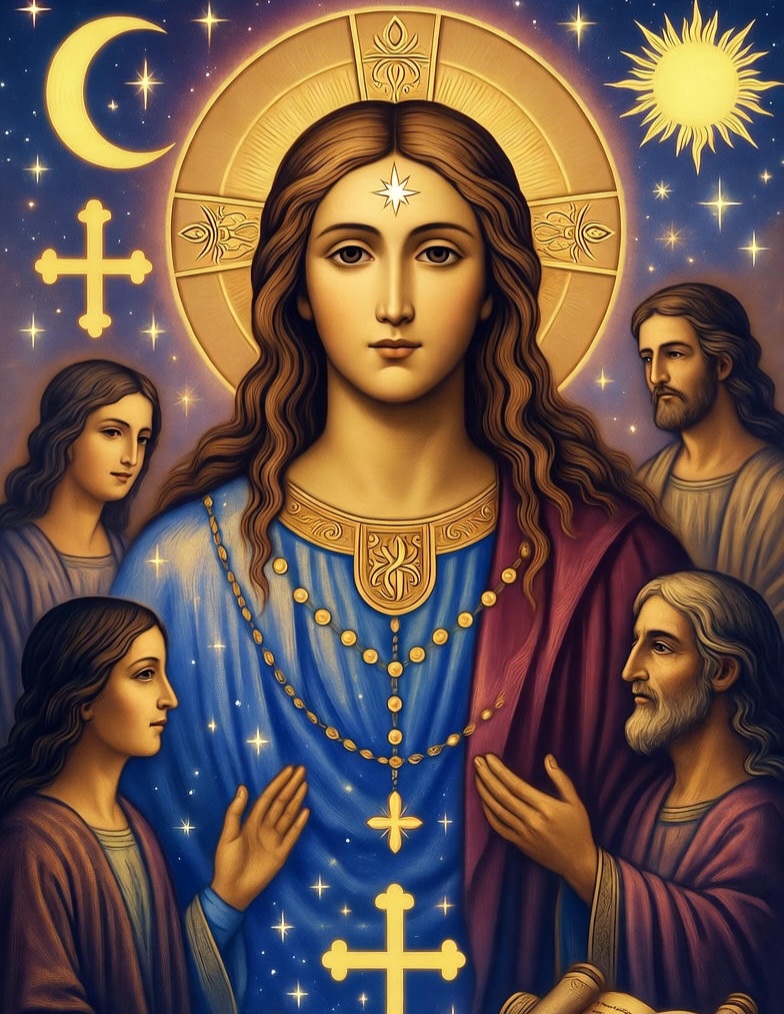
At the heart of Gnosticism, Sophia (or Pistis Sophia) isn’t just an abstract idea—she’s an aeon, a divine feminine emanation representing primordial wisdom. Her “fall” creates the material world, governed by the demiurge (a false god, like Yaldabaoth), but her redemption brings salvation.
And Jesus? In Gnosticism, he’s Sophia’s perfect counterpart—her syzygy, or spiritual twin. Together, they restore lost gnosis, teaching that salvation comes from inner knowledge, not external rituals. Texts like the Pistis Sophia describe a post-resurrection Jesus revealing cosmic mysteries to his disciples, with Sophia as the “Faith-Wisdom” crying out for liberation.
Imagine: a story where the divine feminine isn’t suppressed but celebrated as essential to enlightenment. This challenges the patriarchal Trinity and empowers the personal quest for truth. Yet, these teachings were seen as a threat—and voilà, the Council labeled them heresy.
Gnostic tip for daily life: Reflect on your own “fall” into the material world. What does the Sophia within you long to reveal?
The Vatican’s Hidden Hand: Why Did They Conceal Sophia and Jesus?
The Council of Nicaea was just the spark. Over the centuries, the Catholic Church, led by the Vatican, maintained secret archives—like the alleged “Vatican Secret Archives”—filled with Gnostic texts. Rumors suggest some Nag Hammadi manuscripts were circulating there before 325 CE but were locked away to preserve dogma.
Why? Control. A Gnostic view of Jesus and Sophia democratizes the divine—anyone can access gnosis without clerical intermediaries. This would undermine ecclesiastical power. Movies like Stigmata and conspiracy theories echo this: the Vatican as guardian of dangerous truths.
With 1,700 years since the Council being commemorated, it’s time to ask: what if the suppression of the sacred feminine wasn’t just historical but ongoing? Nag Hammadi proves the truth endures—buried, but not dead.
Here are the main reasons for the concealment, in simple bullet points:
- Patriarchal Power: Suppress Sophia to elevate a masculine God.
- Doctrinal Unity: Avoid “heresies” that could fragment the Church.
- Social Control: Keep the faithful dependent on rituals, not personal knowledge.
- Fear of Gnosis: Revealing cosmic secrets might “liberate” the masses too soon.
Awaken Your Gnosis: The Legacy of Nicaea and Nag Hammadi Today
Friend, the Council of Nicaea may have hidden manuscripts, and the Vatican may have locked doors, but the light of Sophia and Jesus shines through Nag Hammadi. This story isn’t about eternal guilt but redemption—yours. In a world of ready-made narratives, seek gnosis: read the texts, meditate on fallen wisdom, and question what you’re told.
Want to dive deeper? Start with accessible translations of the Pistis Sophia or visit sites about Gnosticism. The truth is out there, waiting for you to unearth it. What do you think: time to rewrite history?
Sources:
- Encyclopaedia Britannica – Council of Nicaea
- Wikipedia – Council of Nicaea
- History Channel – Nicene Creed
Historical and theological sources on the Council of Nicaea and its influence on the formation of Christian doctrine.